As Amazon Associates, we earn from qualifying purchases. This means we may receive a small commission at no extra cost to you if you click through and make a purchase.
Microsoft has defined the modern console space through a bifurcated hardware strategy centered on custom AMD silicon, standardized solid-state throughput, and backward compatibility spanning four hardware eras. Under the Xbox banner, current-gen engineering splits into distinct performance tiers: compact platforms designed for responsive rasterization at mainstream resolutions, alongside full-scale systems engineered for uncompressed visual pipelines and native ultra-high-definition output. Both hardware paths leverage the proprietary Xbox Velocity Architecture, pairing custom NVMe storage controllers with dedicated decompression hardware to eliminate asset streaming bottlenecks, minimize load cycles, and enable low-latency state preservation across titles. When configuring an entertainment environment with audio gear like sonos surround speakers, the shared platform support for Dolby Atmos and Dolby Vision across both branches provides a consistent spatial and acoustic benchmark.
While sharing a baseline operating environment and unified peripheral ecosystem, these six configurations diverge significantly across compute performance targets ranging from 4 TFLOPS to 12 TFLOPS, memory bus widths, internal solid-state capacities of 512GB or 1TB, and the presence or exclusion of a physical 4K UHD Blu-Ray optical drive. Selecting the right platform requires an exhaustive xbox new gen comparison focused on memory bandwidth limitations, thermal footprints, and physical versus all-digital licensing constraints.
Xbox Gaming Consoles Compared
| Console Model | Target Resolution & Compute | System Memory | Internal NVMe Storage | Optical Drive Type |
|---|---|---|---|---|
| Xbox Series S | 4 TFLOPS, 4K / 120 FPS target | Not listed | 512GB Custom NVMe SSD | All-Digital (No Disc Drive) |
| Xbox Series X | 12 TFLOPS, True 4K / 120 FPS target | Not listed | 1TB Custom NVMe SSD | All-Digital (No Disc Drive) |
| Xbox Series X 1TB Gaming Console | True 4K / 120 FPS, Up to 8K HDR | 16GB GDDR6 (320-bit bus) | 1TB Custom NVMe SSD | 4K UHD Blu-Ray |
| Xbox Microsoft Series S 1TB SSD | 1440p / 120 FPS target | 10GB RAM | 1TB SSD | All-Digital (No Disc Drive) |
| Xbox Series S 512GB SSD All-Digital | 4 TFLOPS, 1440p / 120 FPS target | 10GB GDDR6 (128-bit bus) | 512GB Custom NVMe SSD | All-Digital (Disc Free) |
| Xbox Series S Starter Bundle | 1440p / 120 FPS target | 10GB (Memory Storage Capacity listing) | 512GB Custom SSD | All-Digital (No Disc Drive) |
Table from this guide — scroll sideways for the remaining columns.
Xbox Series S for Compact High-Refresh Gaming


Xbox Series S 4 photos from the Amazon listing
Best for: New ecosystem adopters wanting instant library access
Pros
- Included 3-month Game Pass Ultimate
- Xbox Velocity Architecture
- Low-latency 120 FPS capability
Cons
- 512GB base SSD
- Digital-only disc restriction
Best for: Competitive esports players wanting high refresh rates
Pros
- Hardware decompression block
- AMD FreeSync and VRR
- Custom Zen 2 CPU
Cons
- 512GB base storage
- No physical disc slot
Best for: Digital gamers prioritizing compact size and 120FPS
Pros
- Compact form factor
- Up to 120 FPS support
- Dolby Vision and Atmos
Cons
- 512GB fills up quickly
- No physical optical disc drive
The Xbox Series S (model EP2-10050) serves as the entry baseline for the current platform generation, engineered specifically for gamers who want current-era execution speeds within a minimal physical footprint. Finished in Robot White, this all-digital console integrates 4 teraflops of graphical processing power to deliver frame rates reaching up to 120 FPS alongside hardware-accelerated DirectX Raytracing. The system supports visual output up to 4K resolution, while incorporating 3D Spatial Sound alongside Dolby Vision and Dolby Atmos protocols for immersive audiovisual staging. Because it operates as an entirely digital unit, game deployment relies solely on downloadable software and cloud integration, preventing the use of legacy disc-based media.
Data delivery on this platform is handled by a custom 512GB NVMe solid-state drive operating in tandem with the Xbox Velocity Architecture. This architecture facilitates Quick Resume, allowing users to suspend and instantaneously transition between multiple active software titles without sitting through full boot sequences or loading screens. The retail packaging provides the 512GB console, a matching white Xbox Wireless Controller equipped with textured trigger grips, a hybrid directional pad, and a dedicated Share button, alongside a high-speed HDMI cable, power cable, and two AA batteries. Networking connectivity is managed via integrated Wi-Fi and Bluetooth hardware.
This model is best suited for players prioritizing small-profile form factors and high refresh rates on 1080p or 1440p displays, or casual players relying primarily on digital catalogs. However, users managing extensive installations of modern titles will find the 512GB storage envelope restrictive over time, making higher-capacity alternatives like the 1TB variants or standard optical-drive units a more practical configuration for deep local libraries.
Xbox Series X for Dedicated 4K Digital Performance


Xbox Series X 1TB Gaming Console 4 photos from the Amazon listing
Best for: Enthusiasts with 4K discs and monitors
Pros
- 4K UHD Blu-Ray drive
- 16GB GDDR6 memory
- 12 TFLOPS 4K performance
Cons
- Bulky console chassis
- Requires large physical desk footprint

Best for: 4K digital players needing maximum processing power
Pros
- 12 TFLOPS compute power
- 1TB custom NVMe SSD
- True 4K gaming output
Cons
- No physical disc drive
- Higher power draw
Representing a pure focus on uncompromised digital processing throughput, the all-digital Xbox Series X (model MSEP200692) delivers the platform tier’s peak compute capability without an integrated disc drive. Clad in a clean Robot White enclosure, this hardware revision features 12 teraflops of compute performance, providing the floating-point calculation capacity required to sustain true 4K native rendering, high dynamic range (HDR), and fluid output speeds of up to 120 FPS. Integrated hardware-accelerated ray tracing maps accurate light bounces, shadows, and environmental reflections in real time, backed by 3D Spatial Sound and dual Dolby Vision and Dolby Atmos decoding pipelines.
Storage management is anchored by a factory-installed 1TB custom NVMe SSD running on the Xbox Velocity Architecture framework. This massive internal allocation significantly mitigates storage contention compared to baseline 512GB units, providing ample local allocation for high-resolution 4K asset packs while maintaining instant-on Quick Resume switching across multiple titles. The package contents include the 1TB digital console, a wireless controller featuring textured ergonomics and hybrid inputs, an included high-speed HDMI cable, power cord, and two AA batteries. Connectivity protocols include standard Wi-Fi and Bluetooth controllers.
This specific iteration addresses high-end gamers and display enthusiasts who operate 4K panels and demand maximum render resolutions, but who have completely transitioned away from physical retail packaging. Users who maintain expansive back-catalogs of physical Xbox One, Xbox 360, or original discs must note that this chassis cannot accept physical optical discs under any circumstance, requiring them to look toward disc-equipped Series X models instead.
Xbox Series X 1TB Gaming Console for Physical Media and Native 4K


Xbox Series X - All Digital Gaming Console - 4 photos from the Amazon listing
The Xbox Series X 1TB Gaming Console in Carbon Black represents the complete physical-plus-digital flagship implementation of the hardware generation. Built around AMD Zen 2 CPU and RDNA 2 GPU architectures, this unit processes advanced graphical workloads with DirectX ray tracing to construct precise reflections and dynamic ambient illumination. The underlying memory subsystem is particularly robust, featuring 16GB of GDDR6 memory deployed across a 320-bit wide bus. This pool is structured into an asymmetric bandwidth allocation of 10GB operating at 560 GB/s for memory-intensive graphics workloads and 6GB operating at 336 GB/s for general system operations, preventing pipeline starvation during intensive scenes.
Engineered for high-end AV environments, the system targets native True 4K gaming at up to 120 FPS, with the internal display pipeline capable of scaling up to 8K HDR. It incorporates a physical 4K UHD Blu-Ray optical drive, ensuring hardware compatibility with legacy disc media across four generations of gaming as well as physical ultra-high-definition film formats. Modern display connectivity is supported through advanced HDMI features, including Auto Low Latency Mode (ALLM), HDMI Variable Refresh Rate (VRR), and AMD FreeSync synchronization to eliminate frame tearing. This degree of hardware flexibility mirrors the connectivity choices evaluated when benchmarking external display configurations against a clearance hp laptop in a hybrid workstation setup.
Supplied with an Ultra High Speed HDMI cable, a Carbon Black wireless gamepad, and power cable, this unit is engineered directly for audio-video purists, collector-tier gamers with substantial physical disc libraries, and enthusiasts with dedicated 4K/120Hz display panels. It gives way to the digital-only editions only for shoppers actively seeking a lower physical footprint or those who have entirely abandoned optical discs.
Xbox Microsoft Series S 1TB SSD for Expanded Digital Storage



Xbox Microsoft Series S 1TB SSD 4 photos from the Amazon listing
Best for: All-digital players needing double baseline SSD space
Pros
- 1TB internal NVMe storage
- Up to 120 FPS support
- Compact form factor
Cons
- Limited to 1440p target
- No disc drive
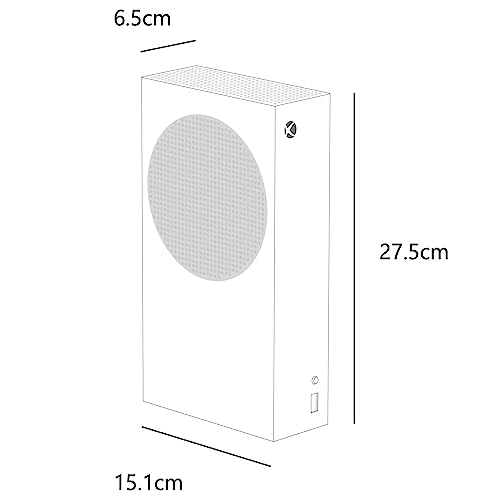
The Xbox Microsoft Series S 1TB SSD (model XXU-00001) resolves the primary limitation of entry-level all-digital gaming by doubling the base solid-state drive footprint right out of the factory. Featuring a sleek Carbon Black aesthetic (while listed with white color notes in base specs), this console retains the streamlined physical volume of the S-tier chassis while packing a full 1TB custom solid-state drive. It incorporates 10GB of unified system RAM and focuses its rendering targets on a native 1440p resolution envelope with refresh scaling running up to 120 frames per second.
By leveraging the integrated Xbox Velocity Architecture and dedicated internal NVMe design, the platform achieves the same ultra-low load times and multi-title Quick Resume responsiveness that define the wider hardware ecosystem. Full-spectrum audiovisual capabilities remain intact, featuring both Dolby Vision HDR processing and Dolby Atmos spatial audio output. The package supplies the 1TB console, an ultra high-speed HDMI cable, a Carbon Black wireless controller, power line, and dual AA cells, with Wi-Fi serving as the primary wireless network bridge.
This hardware execution directly serves modern digital gamers who play installation-heavy current-gen releases such as Starfield and Forza Motorsport, where large data footprints quickly overwhelm smaller drives. It provides a turn-key solution that circumvents the immediate requirement for external storage expansions, though users seeking native 4K rendering pipelines or physical disc functionality will still need to step up to the Series X platform.
Xbox Series S 512GB SSD All-Digital for Budget-Conscious Esports


Xbox Series S 512GB SSD All-Digital Gaming Console (disc 4 photos from the Amazon listing
The Xbox Series S 512GB SSD All-Digital configuration provides precise architectural specifications for competitive players who scrutinize core processor metrics. Under the hood, the console is powered by a custom AMD Zen 2 CPU sporting 8 cores clocked at 3.6 GHz (or 3.4 GHz when utilizing simultaneous multithreading / SMT). The graphics rendering relies on a custom AMD RDNA 2 GPU delivering 4 TFLOPS of compute across 20 Compute Units (CUs) clocked at 1.565 GHz, fabricated on a monolithic system-on-chip (SOC) with a 197.05 mm2 die size.
Memory throughput on this all-digital unit is carefully architected via a 10GB GDDR6 pool over a 128-bit wide bus, allocated into 8GB executing at 224 GB/s and 2GB operating at 56 GB/s. The custom 512GB NVMe SSD achieves raw I/O throughput of 2.4 GB/s, which scales up to 4.8 GB/s for compressed data through a custom integrated hardware decompression block. The video pipeline is calibrated for 1440p gaming targets at up to 120 FPS, backed by Auto Low Latency Mode, HDMI Variable Refresh Rate, and AMD FreeSync support to maintain ultra-low latency inputs on high-refresh desktop monitors. Storage scalability is provided via support for 1TB Seagate Expansion Cards and external USB 3.1 hard drives.
This exact listing is tailored for esports enthusiasts, competitive multiplayer gamers, and technical buyers who connect their console to low-latency gaming monitors rather than massive 4K living room panels. The unit gives way to the 1TB models for users who refuse to cycle game installations off the 512GB internal solid-state drive or those who need an optical disc drive for physical game discs.
Xbox Series S Starter Bundle for Immediate Cloud and Library Access


Xbox Series S Starter Bundle - Includes hundreds of 4 photos from the Amazon listing
The Xbox Series S Starter Bundle (model RRS-00144) is configured to deliver complete out-of-the-box software utility alongside standard baseline hardware. Finished in classic White, the bundle centers around the 512GB all-digital console, capable of rendering gameplay up to 120 FPS at an internal target resolution of 1440p. The machine runs on the proven Xbox Velocity Architecture, delivering rapid asset decompression, lightning-fast boot sequences, and Quick Resume functionality across digital titles. In terms of peripheral compatibility, the console supports modern wireless sound solutions such as pairing with a sound box bose via standard system audio routes.
What differentiates this package is its included software provisioning. Along with the console, single wireless controller, high-speed HDMI cable, power cord, and two AA batteries, the package bundles a 3-month membership to Xbox Game Pass Ultimate. This subscription immediately opens access to hundreds of catalog titles across cloud, console, and PC, including day-one access to major releases, integrated online multiplayer functionality, and an EA Play membership providing access to racing and action franchises without requiring separate retail purchases.
This starter kit is specifically curated for newcomers entering the Xbox platform from other console generations who possess zero existing digital game licenses and require immediate library access on day one. It is less suited for hardware purists who already have extensive back-catalogs, require more than 512GB of baseline local SSD capacity, or require 12 TFLOPS computing power for native 4K display panels.
How to Choose the Right Xbox Gaming Console
Deciding which xbox new gen to buy requires evaluating your display setup, your tolerance for local storage management, and your reliance on physical versus digital media formats. Navigating the current ecosystem centers on clear technical trade-offs across three primary hardware vectors.
- Compute Throughput and Display Targets: The platform divides sharply across raw computing metrics. The 4 TFLOPS architecture found in the Series S tier is optimized for 1440p rasterization and competitive 120 FPS delivery on standard desktop monitors and sub-4K displays. If your setup features an expansive 4K display with high refresh rates, stepping up to the 12 TFLOPS architecture present in both the digital and disc-equipped Series X models is essential to avoid downsampling and ensure native 4K texture detail.
- Memory Bandwidth and System RAM: Examining overall xbox gaming consoles specs reveals that the Series X platform leverages 16GB of GDDR6 memory across a wide 320-bit bus, delivering up to 560 GB/s of bandwidth. In contrast, the Series S features 10GB of GDDR6 across a 128-bit bus with a peak bandwidth of 224 GB/s. Demanding visual fidelity, ray tracing complexities, and asset-heavy open worlds benefit directly from this widened bandwidth envelope.
- Internal SSD Allocation: The custom NVMe storage subsystem is vital to platform operation, but modern game install sizes can be substantial. Baseline 512GB units fill up rapidly after installing just a few modern releases. If you intend to maintain a wide array of local titles simultaneously without buying proprietary external expansion cards, selecting a 1TB model like the Carbon Black Series S or either Series X version provides immediate breathing room for your installation library.
- Optical Drive Utility: The ongoing xbox series x vs series s divide is fundamentally defined by physical media support. Every Series S console and the white Series X digital edition are entirely disc-free, requiring all content to be acquired digitally. If you possess a library of legacy Xbox 360 or Xbox One game discs, or use your entertainment console as a dedicated 4K UHD Blu-Ray home theater player, the standard Carbon Black Series X 1TB console remains the only configuration capable of reading physical discs.
FAQ
What is the difference in GPU performance between Xbox Series X and Xbox Series S?
The graphical compute pipeline differences are substantial. The Xbox Series X integrates a custom RDNA 2 GPU producing 12 teraflops of compute performance, specifically engineered to target native True 4K resolution at up to 120 FPS. In contrast, the Xbox Series S GPU produces 4 teraflops across 20 Compute Units clocked at 1.565 GHz, targeting a render resolution of 1440p up to 120 FPS. While both support DirectX ray tracing, the Series X possesses triple the raw floating-point calculation capacity to handle denser visual assets and higher native output resolutions.
Can all Xbox current-gen consoles play physical disc media?
No, the majority of the current lineup operates entirely without physical media support. The Xbox Series S (both 512GB and 1TB variants) and the all-digital white Xbox Series X do not contain optical disc drives and cannot read physical discs. Only the standard Carbon Black Xbox Series X 1TB Gaming Console includes a physical 4K UHD Blu-Ray optical drive capable of playing retail game discs from across four generations of Xbox hardware alongside physical ultra-high-definition film discs.
How does Xbox Velocity Architecture and Quick Resume function on these consoles?
The Xbox Velocity Architecture is an integrated hardware and software solution that pairs custom internal NVMe solid-state storage with dedicated hardware decompression blocks and custom software APIs. By achieving raw throughput speeds of 2.4 GB/s (and up to 4.8 GB/s compressed), the system enables near-instant asset streaming directly into system memory. This infrastructure powers Quick Resume, an OS-level feature that dumps an active game’s memory state directly onto the SSD, allowing players to switch between multiple titles and resume active gameplay within seconds without reloading from the title screen.
What are the memory bandwidth differences between Series X and Series S models?
The memory subsystems feature distinct bus configurations and throughput rates. The Xbox Series X utilizes 16GB of GDDR6 memory across a 320-bit bus, providing 10GB of primary memory running at 560 GB/s and 6GB of secondary memory at 336 GB/s. The Xbox Series S features 10GB of GDDR6 memory routed through a 128-bit bus, with 8GB running at 224 GB/s and 2GB running at 56 GB/s. The wider bus on the Series X ensures that memory-heavy 4K frame buffers and high-resolution textures can transfer without creating graphical processing bottlenecks.
Can internal storage be expanded on 512GB and 1TB Xbox consoles?
Yes, all current-gen Xbox consoles support external storage expansion to supplement their internal solid-state drives. The hardware includes a dedicated rear expansion slot designed to accept plug-and-play Seagate Storage Expansion Cards that match the internal NVMe speed and Xbox Velocity Architecture specifications. Additionally, the listings note support for standard external USB 3.1 hard drives, which can be connected to store digital libraries and run backward-compatible legacy software.


