As Amazon Associates, we earn from qualifying purchases. This means we may receive a small commission at no extra cost to you if you click through and make a purchase.
Sonos has established a dominant footprint in the multi-room audio sector by pairing networked streaming software with acoustic engineering. While the brand initially gained widespread consumer adoption through standalone, active smart speakers, its architectural line targets permanent residential installations. In modern architectural audio, homeowners and system integrators look for clean interior aesthetics without sacrificing high-fidelity sound reproduction. By collaborating with Sonance, Sonos bridges the gap between passive custom-install architectural transducers and its proprietary wireless ecosystem. Choosing the right configuration requires evaluating structural requirements, mounting depths, driver dimensions, and power distribution across your living spaces.
Across these five hardware configurations, the lineup diverges between active standalone units in the Four Room Set Sonos One SL, passive wall and ceiling transducers engineered for targeted or ambient coverage, and the centralized Sonos Amp required to power and tune non-amplified architectural drivers.
Sonos In-Wall Speakers Compared
| Model | Mounting Type | Speaker Size | Audio Output Mode | Key Hardware Feature |
|---|---|---|---|---|
| Four Room Set Sonos One SL | Tabletop Mount | 6.5 inches | Surround | Humidity resistant, AirPlay 2, microphone-free |
| Sonos in-Wall by Sonance | Wall Mount | 7.8 inches | Stereo, Surround Sound | Paintable grilles, custom Trueplay tuning via Amp |
| Sonos Amp | AV Rack | 6.5 inches | Stereo | 125W per channel, direct digital input, HDMI eARC |
| Sonos in-Ceiling by Sonance | Ceiling Mount | 15.2 centimeters | Stereo | 165 mm woofer, 36 Hz to 20 kHz, 90-degree coverage |
| Sonos in-Ceiling Speakers 8″ by Sonance | Ceiling Mount | 8 inches | Stereo | 225W RMS power, 8-ohm impedance, trimless |
Table from this guide — scroll sideways for the remaining columns.
Four Room Set Sonos One SL for Multi-Room Wireless Deployments


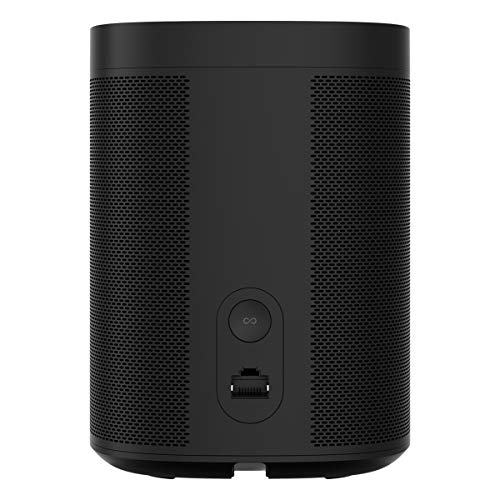
Four Room Set Sonos One SL 4 photos from the Amazon listing
Best for: Multi-room wireless setups without running cables
Pros
- AirPlay 2 support
- Humidity-resistant build
- Microphone-free privacy
Cons
- Requires tabletop surface
- Lacks architectural flush mounting
The Four Room Set Sonos One SL provides a decentralized, multi-room audio deployment consisting of four discrete, powered speakers. Unlike architectural installations that require cutting into drywall and running in-wall speaker wire, these enclosures utilize standard tabletop placement. Each unit features a durable plastic enclosure finished in black and is engineered for straightforward room-to-room deployment. The system functions as a robust alternative to a wired sonos in wall set when structural modifications are prohibited, such as in rental properties or buildings with solid concrete walls.
From an acoustic and hardware perspective, each speaker features a 6.5-inch footprint and supports multi-room audio output alongside dedicated surround sound operation. The compact enclosure is engineered with humidity resistance, allowing reliable operation in moisture-prone zones such as master bathrooms, kitchens, or sheltered outdoor spaces, though the listing confirms it is not fully waterproof. A key specification is the microphone-free architecture, ensuring continuous privacy while streaming directly through Apple AirPlay 2, the Sonos mobile application, or paired smart control setups. When integrated with home theater front stages like the Beam, Playbar, or Playbase, two units from this set can serve as dedicated sonos surround speakers to build a comprehensive surround sound field.
This four-pack bundle is tailored for listeners who want immediate audio distribution across up to four distinct zones without opening walls or installing structural brackets. The speakers require only standard AC power connections to deliver room-filling sound. However, users seeking a completely flush visual aesthetic with zero equipment footprint on furniture will find this standalone set gives way to dedicated architectural solutions like the Sonos in-Wall by Sonance.
Sonos in-Wall by Sonance for Focused Architectural Audio


Sonos in-Wall by Sonance 4 photos from the Amazon listing
Best for: Directional home theater and media room listening
Pros
- Custom Trueplay tuning
- Paintable magnetic grilles
- Flush wall-mount profile
Cons
- Requires Sonos Amp
- Permanent wall cutout required
The Sonos in-Wall by Sonance represents a specialized architectural speaker designed for focused, ear-level listening. Built to mount flush inside standard interior wall cavities, this model removes cabinet clutter from living spaces while delivering bold audio reproduction for television, movies, and dedicated music listening. The physical construction incorporates a durable plastic or polymer enclosure paired with specially engineered magnetic grilles that can be painted to match any wall color, achieving seamless visual integration.
The technical specifications detail a 7.8-inch overall speaker form factor equipped with a 2.5-inch woofer, engineered to support both stereo playback and surround sound duty. While the physical units are passive architectural transducers, connecting them to an external amplifier unlocks sonos architectural trueplay tuning. This proprietary digital signal processing accounts for wall materials, room dimensions, furniture placement, and acoustic reflections, automatically calibrating the output curve for balanced audio response. The listing also highlights an antenna location configured for televisions and an integrated built-in microphone for system management.
This architectural model suits dedicated media rooms, primary living areas, and home theater installations where listeners demand focused, forward-firing sound projection at ear level. It functions as an ideal front-channel or surround-channel solution in modern entertainment layouts. When the goal shifts from directional, targeted television audio toward wide-dispersion ambient background sound distributed evenly across open floor plans, this wall-mounted model defers to ceiling-mounted architectural options.
Sonos Amp for Powering Wired Architectural Systems


Sonos Amp 4 photos from the Amazon listing
Best for: Powering wired architectural and existing audio systems
Pros
- 125 watts per channel
- HDMI eARC integration
- Rack-mountable heatsink design
Cons
- Chassis requires AV placement
- Not an all-in-one speaker
The Sonos Amp serves as the foundational powerhouse required to operate passive sonos architectural speakers. Encased in a compact, matte black chassis with a 6.5-inch form factor, this amplifier delivers a robust 125 Watts per channel into 8-ohm loads. Its modern industrial chassis is rack-mountable, featuring a specially developed central heatsink that optimizes internal airflow and thermal dissipation inside crowded AV cabinets or network enclosures. The rear panel simplifies wire termination, streamlining both high-density custom integration racks and discrete cabinet placements.
Engineered for broad input versatility, the unit includes an HDMI ARC and eARC port, allowing direct, uncompressed digital television audio communication alongside an analog line-in for turntables and traditional audio equipment. Direct digital input circuitry avoids unnecessary analog conversion steps, resulting in pristine, undistorted signal paths. The device supports built-in Wi-Fi, multi-room streaming across over 100 digital services, and app-driven control. The listing specifies a 16-inch subwoofer diameter specification, highlighting comprehensive support for standalone low-frequency drivers. Installers outfitting sleek video installations often mount their display using a sanus soundbar mount while anchoring speaker wiring back to this amplifier in a dedicated media hub. In addition, sonos amp speaker compatibility enables a single amplifier to drive up to three pairs (six total transducers) of Sonos architectural speakers wired in parallel.
The hardware is mandatory for anyone deploying passive in-wall or in-ceiling speakers who demands full software-controlled streaming and room-correction processing. It provides the muscle and digital intelligence for architectural transducers, outdoor deck speakers, and legacy floor-standing systems. For installations where running physical speaker wire through existing framing is structurally impossible, standalone wireless units replace this rack-grade hardware.
Sonos in-Ceiling by Sonance for Ambient Overhead Sound


Sonos in-Ceiling by Sonance 4 photos from the Amazon listing
Best for: Ambient background listening in standard ceilings
Pros
- Wide 90-degree coverage
- 120 mm mounting depth
- DSP-tuned frequency response
Cons
- Ceiling cutting required
- Passive design needs amplifier
The Sonos in-Ceiling by Sonance is engineered to bathe living spaces in ambient, omnidirectional overhead sound. Instead of focusing energy on a singular listening sweet spot, this 15.2-centimeter class architectural transducer disperses audio evenly throughout the entire room. It features a round, paintable grille designed to match ceiling textures, with an optional square grille format available to align with specific architectural motifs and recessed lighting grids.
Under the grille, the transducer utilizes a two-way driver configuration featuring a 165 mm (6.5-inch) woofer paired with a 25 mm tweeter. The speaker yields a frequency response spanning 36 Hz to 20 kHz (±3 dB with active digital signal processing) and is capable of reaching a maximum output of 110 dB at 1 meter. A nominal 90-degree coverage angle ensures wide, consistent sound dispersion across floor plans without high-frequency drop-off. The unit requires an installation depth of 120 mm, allowing it to fit standard ceiling joist depths. Driven by the dedicated amplifier, it unlocks automated Trueplay room calibration, adjusting frequency balance to counteract reflections from hard floors and expansive glass windows.
This model is optimal for open-concept floor plans, kitchens, hallways, and multi-use dining rooms where listeners circulate freely rather than sitting in a fixed listening position. It blankets living spaces in balanced background music without visually intruding into the room decor. For cavernous spaces with ceiling heights exceeding ten feet, this standard model gives way to the higher-output 8-inch ceiling transducer.
Sonos in-Ceiling Speakers 8″ by Sonance for High-Output Overhead Coverage


Sonos in-Ceiling Speakers 8"" by Sonance, White, INCL8WW1 4 photos from the Amazon listing
Best for: Large rooms requiring high-output overhead sound
Pros
- 225 watts RMS handling
- Large 8-inch woofer
- Trimless aesthetic design
Cons
- Requires substantial ceiling clearance
- External amplification required
The Sonos in-Ceiling Speakers 8″ by Sonance elevates architectural overhead performance to reference-grade output levels. Designed for large residential spaces and high-ceiling architectural layouts, this larger-format speaker delivers substantial dynamic range without requiring exposed cabinets. The exterior features a refined, trimless round profile in classic white that integrates flush against sheetrock surfaces, delivering high-performance sound while maintaining an understated visual profile.
Acoustically, the hardware centers on an expansive 8-inch woofer crafted from durable polypropylene, paired with an optimized tweeter assembly. The larger cone area allows the speaker to handle up to 225 Watts of RMS power at a standard 8-ohm impedance. This enhanced power-handling envelope allows the driver to move significantly more air than smaller ceiling units, delivering authoritative low-frequency impact and distortion-free mid-bass reproduction during high-volume playback. The listing confirms a clean stereo output mode engineered specifically for indoor residential applications.
This 8-inch model is purpose-built for spacious great rooms, cavernous commercial-scale living spaces, and dedicated home cinema installations where smaller in-ceiling speakers would run out of acoustic headroom. It produces full-spectrum audio capable of filling high-volume spaces with ease. For standard residential room sizes with standard ceiling heights, the smaller 6.5-inch in-ceiling model provides comparable clarity while requiring a smaller cutout diameter.
How to Choose the Right Sonos In-Wall Speakers
Conducting a thorough sonos in-wall speaker comparison requires balancing architectural design preferences against physical room acoustic parameters. Transducer placement dictates the listening experience: in-wall speakers project sound horizontally at ear level, making them the superior choice for front-stage home theater audio and critical stereo listening where sound localization matters. Conversely, in-ceiling speakers project downward at a wide dispersion angle, making them optimal for ambient listening throughout living rooms, hallways, and dining areas.
Assessing power distribution and impedance handling is equally critical when deciding which sonos in-wall speaker to buy. Passive architectural speakers lack internal amplification and depend entirely on the external amplifier to supply drive current. The amplifier outputs 125 Watts per channel, matching the power requirements of both the 6.5-inch and 8-inch Sonance architectural lines. The system architecture supports parallel wiring of up to three pairs of Sonos architectural speakers onto a single amplifier, maintaining stable 8-ohm operation thanks to internal load-sensing hardware.
Room calibration capabilities represent another core factor in architectural hardware selection. Deploying passive Sonance speakers alongside the proprietary amplifier enables Trueplay digital tuning, which analyzes room boundaries, hard surfaces, and furnishings using your mobile device to establish a custom DSP equalization curve. Standalone options like the Four Room Set Sonos One SL deliver independent room management without in-wall cutting, but they lack the flush architectural integration of dedicated in-wall hardware.
Physical depth and framing clearance ultimately dictate feasible installation choices. The standard in-ceiling model requires an installation depth of 120 mm, which accommodates standard ceiling framing, while the 8-inch variant demands a wider ceiling cutout. When drywall cannot be penetrated due to structural concrete or historic preservation constraints, tabletop active models provide multi-room audio capabilities without architectural modifications.
FAQ
Can Sonos in-wall speakers operate without a Sonos Amp?
Passive Sonos architectural speakers require external amplification to drive their voice coils. While any standard audio amplifier can technically drive them, pairing these transducers with the dedicated amplifier unlocks automated room tuning, software equalization, and seamless multi-room synchronization across the Sonos platform.
How does Sonos architectural Trueplay tuning calibrate passive speakers?
When passive Sonance architectural speakers are connected to the compatible amplifier, internal load-detection circuitry identifies the speakers. This recognition activates Trueplay calibration within the software, measuring acoustic reflections through your mobile device to tailor frequency output specifically to room dimensions and interior materials.
What is the difference between Sonos in-wall and in-ceiling architectural models?
Sonos in-wall speakers feature directional driver orientations suited for targeted horizontal projection at ear level, making them ideal for television audio and stereo soundstages. In-ceiling speakers feature wide-dispersion driver arrays designed to deliver even, omnidirectional background audio across broad horizontal living spaces.
How many architectural speakers can a single Sonos Amp drive simultaneously?
A single amplifier can power up to three pairs, or six total transducers, of Sonos by Sonance architectural speakers wired in parallel. The amplifier detects the impedance load of these specific architectural speakers and maintains stable power distribution without overheating or degrading audio quality.
Are Sonos architectural speakers suitable for high-humidity environments?
The architectural speakers utilize durable polymer and polypropylene materials, but the listings specify they are not waterproof. For moisture-prone areas like bathrooms, the standalone active speaker set features humidity-resistant enclosures specifically designed to withstand elevated ambient moisture levels.


