As Amazon Associates, we earn from qualifying purchases. This means we may receive a small commission at no extra cost to you if you click through and make a purchase.
JBL has maintained an influential role in low-frequency transducer development, producing subwoofers across professional recording studios, home cinema spaces, and automotive installations. The 10-inch driver format represents a critical acoustic equilibrium for the brand, offering sufficient diaphragm surface area to produce controlled low-frequency extension while retaining rapid transient response and manageable enclosure dimensions. Evaluating a modern jbl subwoofer 10 inch platform requires examining motor assemblies, internal amplification, port geometry, and crossover routing across distinct acoustic environments.
These six models diverge across fundamental signal paths and enclosure architectures: the active studio monitor utilizes balanced XLR routing with low-end reach to 27 Hz, the home theater models provide powered polycellulose drivers with dual rear-firing ports, the lifestyle unit incorporates a downward-firing boundary configuration in wood veneer, and the passive automotive drivers require external mobile amplification and custom vehicle enclosures.
JBL 10-Inch Subwoofers Compared
Best for: Dual-driver high-SPL automotive sound systems
Pros
- Includes two matched 10-inch subwoofers
- Rigid automotive polypropylene cone design
- Rigorous environmental torture testing
Cons
- Passive drivers require separate amplification
- Requires custom vehicle enclosure fabrication
| Model | Amplification Type | Power Output / Handling | Enclosure Loading | Signal Interface |
|---|---|---|---|---|
| JBL Professional LSR310S | Powered (Active) | 113 dB peak SPL | Floor-standing PVC with Slip Stream port | Balanced XLR and 1/4-inch |
| JBL Stage 2 200P 300 Watt | Powered (Active) | 150W RMS / 300W dynamic | Dual rear-firing tuned ports | Wired line-level |
| JBL L10cs 10 Inch Down Firing | Powered (Active) | 250W RMS / 250W maximum | Down-firing black walnut veneer | RCA-type LFE |
| JBL 10″ Car Audio Subwoofer | Passive (Component) | 225W RMS / 900W peak | Sealed or ported car enclosure | Speaker wire terminals |
| JBL 200P 10″ Subwoofer | Powered (Active) | 300W maximum output | Dual rear-firing tuned ports | Line-level LFE input |
| JBL | Passive (Dual Component) | 225W RMS / 900W peak (per driver) | Sealed or ported car enclosure | Speaker wire terminals |
Table from this guide — scroll sideways for the remaining columns.
JBL Professional LSR310S for Studio Monitoring


JBL Professional LSR310S 4 photos from the Amazon listing
Best for: Professional studio mixing and reference monitoring suites
Pros
- Balanced XLR and quarter-inch inputs
- XLF dance club emulation tuning
- Reaches 27Hz low-frequency extension
Cons
- Requires balanced studio line sources
- Non-waterproof PVC cabinet construction
The JBL Professional LSR310S is an active studio monitor subwoofer engineered to serve as a low-frequency reference anchor in critical mixing and production suites. Built around a 10-inch custom-designed driver measuring 25.4 centimeters in diameter, this floor-standing unit features a dense polyvinyl chloride enclosure designed to endure sustained playback at full rated power without mechanical failure. Operating as a specialized jbl powered subwoofer 10 inch system, the cabinet extends reproduction into the 20 Hz region and delivers clean low-frequency output down to 27 Hz with a maximum peak sound pressure level of 113 dB.
Acoustic tuning is governed by a patented double-flared low-frequency port precisely calculated to minimize turbulence and optimize low-end extension across dynamic monitoring swings. The interface section includes professional balanced XLR and 1/4-inch inputs alongside dedicated XLR pass-through outputs, enabling clean integration into stereo reference monitor chains or as the designated .1 LFE channel in surround arrays. Signal compatibility is supported by an onboard -10 dBV / +4 dBu sensitivity switch, touch control functionality, and an exclusive XLF setting that emulates the low-frequency acoustic profile of commercial dance club sound systems.
This reference unit suits audio engineers, music producers, and mastering technicians who require balanced I/O connectivity, accurate bass translation, and studio line-level calibration. It gives way to consumer-oriented units like the Stage 2 200P when an audio setup relies on standard consumer RCA connections rather than professional studio hardware.
JBL Stage 2 200P 300 Watt for Home Theater Bass



JBL Stage 2 200P 300 Watt 4 photos from the Amazon listing
Best for: Multichannel home cinema systems needing energetic bass
Pros
- 300W dynamic peak power capability
- Dual rear-firing tuned bass ports
- Adjustable crossover and phase control
Cons
- Restricted to wired home sources
- Rear ports require wall clearance
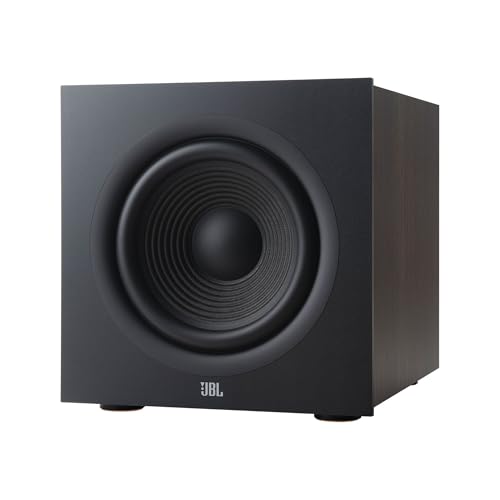
The JBL Stage 2 200P 300 Watt is a powered home theater subwoofer built to supply energetic low-frequency reinforcement across multichannel movie and music environments. At the core of the design is a 10-inch (250mm) polycellulose ribbed cone woofer, utilizing cone geometry that enhances structural rigidity while preventing unwanted diaphragm breakup during demanding transients. Power delivery is supplied by an integrated amplifier generating 150 watts RMS and reaching 300 watts of dynamic peak output, supporting multichannel surround output modes via wired connectivity.
Acoustically, the cabinet integrates dual rear-firing tuned ports engineered to disperse internal cabinet pressure evenly, reducing port noise and broadening room coupling. The rear integration panel houses essential calibration controls, including variable low-pass crossover adjustment, output level gain, and a dedicated phase switch to align acoustic wavefronts with main satellite speakers. The listing indicates a 150 Hz upper frequency specification, ensuring consistent handoffs with bookshelf or floor-standing home theater speakers.
The JBL Stage 2 200P 300 Watt serves home cinema builders seeking front-firing driver impact coupled with bass-reflex porting for medium-sized residential rooms. It gives way to the L10cs for listeners whose room architecture requires a concealed down-firing orientation and premium furniture-grade wood aesthetics.
JBL L10cs 10 Inch Down Firing for Clean Living Rooms


JBL L10cs 10 Inch Down Firing 4 photos from the Amazon listing
Best for: Living room media setups needing furniture-grade aesthetics
Pros
- 250W RMS built-in power amplifier
- Natural black walnut wood veneer
- Standby power consumption under 0.5W
Cons
- Down-firing orientation needs firm flooring
- Limited to single RCA LFE connection
The JBL L10cs 10 Inch Down Firing directs acoustic energy downward toward the floor boundary, utilizing a 10-inch polycellulose cone woofer mounted in a floor-standing configuration. Enclosed within a cabinet finished in real black walnut wood veneer, the unit integrates smoothly into living areas, media dens, and gaming rooms without exposing delicate driver parts. The internal power amplifier produces 250W RMS with a 250-watt maximum output ceiling, driving sustained low frequencies across music, movie, and gaming content.
System integration relies on an RCA-type LFE connection that interfaces directly with modern audio/video receivers, integrated stereo amplifiers, televisions, and gaming consoles. The rear control panel provides comprehensive sound adjustment through variable crossover frequencies, output level control, and phase toggling. Energy efficiency is maintained via an advanced standby circuit consuming less than 0.5W during idle states, accompanied by selectable AC voltage switching for international electrical standards. Readers comparing downward-directed dispersion to alternative form factors can reference our kicker down firing subwoofer 12 breakdown to observe how boundary loading impacts low-end uniformity.
This model suits interior-conscious homeowners and gaming enthusiasts who prioritize furniture-grade cabinetry and driver protection against foot traffic or pets. It gives way to the LSR310S when balanced studio connections and specialized club-monitoring crossover curves are required.
JBL 10″ Car Audio Subwoofer for Custom Vehicle Enclosures


JBL 10" Car Audio Subwoofer 4 photos from the Amazon listing
Best for: Custom single-driver automotive audio enclosure builds
Pros
- High 900W peak power handling
- Airflow-cooled 1.5-inch voice coil
- Operates in sealed or ported boxes
Cons
- Protective speaker grille not included
- Requires outboard automotive amplifier
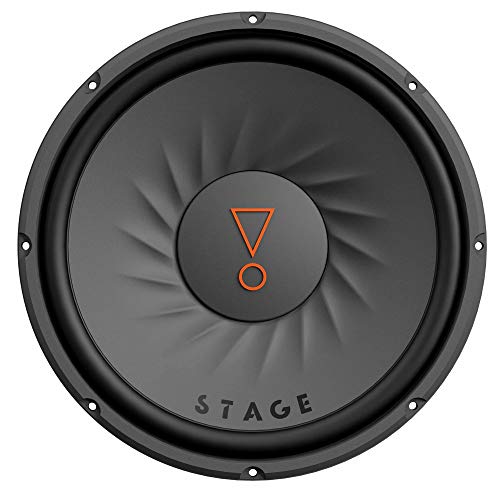
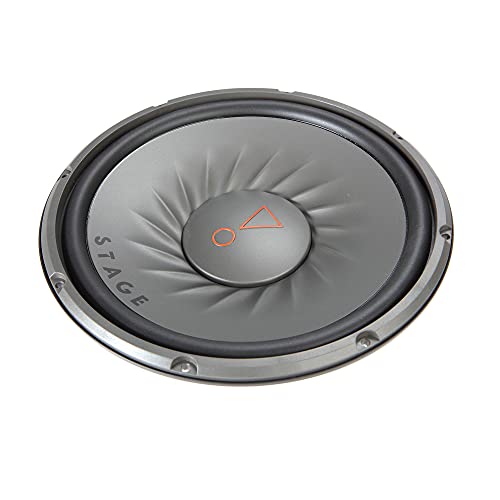
The JBL 10″ Car Audio Subwoofer (Stage 102AM) is a passive mobile audio driver designed for custom vehicle mounting. The transducer features a lightweight yet stiff polypropylene cone paired with a high-roll rubber surround engineered to withstand thermal cycling and continuous mechanical movement inside vehicle cabins. As a dedicated jbl 10 car subwoofer, this component driver requires an outboard automotive amplifier and custom enclosure fabrication to operate.
Power tolerances include a continuous rating of 225 watts RMS and a maximum threshold of 900 watts peak. Thermal management is anchored by a 1-1/2-inch voice coil cooled by forced airflow generated directly by cone excursion during playback. JBL subjects these drivers to environmental validation protocols that include baking, freezing, and full-power testing to ensure operational durability. The driver operates in both sealed enclosures for controlled transient speed and ported enclosures for heightened output efficiency, though an exterior protective grille is not included.
This single driver suits car audio hobbyists and installers building a bespoke trunk setup that balances compact enclosure dimensions with solid low-frequency punch. It gives way to the dual STAGE102 package when an installer seeks higher total acoustic output and increased cone displacement.
JBL 200P 10″ Subwoofer for Multichannel Audio


JBL 200P 10" Subwoofer - Black Ash - Each 4 photos from the Amazon listing
Best for: Home theater systems requiring remote-controlled operation
Pros
- Engineered in Northridge California center
- Line-level LFE input integration
- Dedicated remote control included
Cons
- Floor-standing cabinet occupies floor area
- Rear ports restrict flush wall placement
The JBL 200P 10″ Subwoofer was engineered at JBL’s Acoustic Engineering Center of Excellence in Northridge, California, functioning as a dedicated powered component for surround sound setups. The cabinet features a front-firing, high-excursion 10-inch (250mm) polycellulose low-frequency woofer finished in Black Ash with matching solid front baffles and grilles. Backed by a 300W powered amplifier platform, it delivers firm dynamic impact across high-energy film soundtracks and music sources.
Cabinet acoustics utilize dual rear-firing tuned ports designed to reduce air compression during high-volume playback. System connectivity is centered around a dedicated line-level LFE input that accepts filtered sub-bass signals directly from surround sound decoders. For users evaluating how dedicated home subwoofers compare against integrated TV packages, reviewing our jbl soundbar subwoofer guide details the dynamic headroom advantages offered by standalone powered enclosures. Operation is supplemented by a remote control method for adjustments from the primary seating area.
The 200P serves movie lovers and multichannel home theater enthusiasts who desire California-engineered acoustic architecture and convenient remote management. It gives way to the passive Stage automotive drivers for mobile 12V audio applications.
JBL for High-Output Dual Car Installations


JBL - Two STAGE102 10" Car Audio Subwoofers 4 photos from the Amazon listing
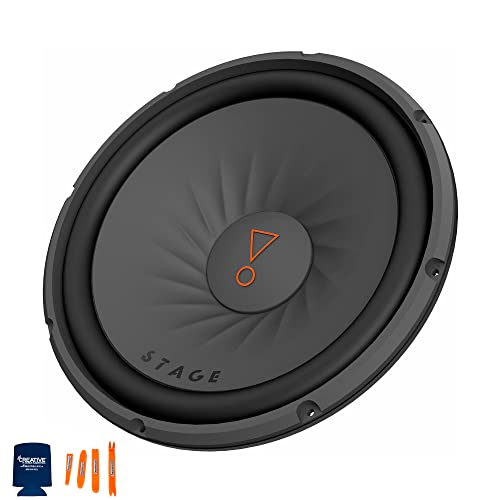
The JBL dual STAGE102 package includes two 10-inch car audio subwoofers engineered to multiply low-frequency surface area and sound pressure levels inside passenger vehicles. Operating as a matched 4-ohm driver bundle, each individual woofer handles 225 watts RMS and 900 watts peak power, with total power handling capability reaching up to 1000 watts peak. Supplying two identical drivers allows installers to configure multi-subwoofer wiring arrangements to optimize amplifier impedance loads and output efficiency.
Each driver uses a rigid polypropylene cone paired with a heavy-duty automotive rubber surround designed for high durability and clean acoustic reproduction. The drivers undergo severe environmental stress evaluations, including freezing, baking, vibration testing, ultraviolet exposure, and multi-day full-power torture testing. The drivers are tuned for high SPL and low harmonic distortion across both vented and acoustic-suspension sealed enclosures, with the listing identifying lightweight construction and car mount compatibility.
This dual bundle is designed for automotive audio builders seeking higher output capacity, lower distortion through shared excursion, and trunk-filling bass presence. It gives way to the single Stage 102AM driver when vehicle cargo space is restricted to a single compact enclosure.
How to Choose the Right JBL 10-Inch Subwoofer
Selecting the best jbl 10 inch subwoofer requires identifying the electrical interface and enclosure requirements of your installation space. Active studio monitors, powered residential subwoofers, and passive automotive drivers operate under fundamentally different technical requirements, making it essential to match your source equipment to the driver architecture.
For music production and audio engineering desks, determining which jbl 10 inch subwoofer to buy leads directly to the JBL Professional LSR310S. It is the only model reviewed that features balanced XLR and 1/4-inch studio inputs, input sensitivity toggling between consumer and professional reference levels, and club-style XLF tuning. Connecting home theater or mobile subwoofers into a studio signal path introduces impedance mismatches and unbalanced line noise.
For home theater and residential listening environments, a rigorous jbl 10 inch subwoofer comparison centers on driver orientation and cabinet materials. The Stage 2 200P and 200P both provide 300-watt maximum output active platforms with front-firing polycellulose drivers and dual rear-firing ports, demanding adequate clearance from rear room boundaries. In contrast, the JBL L10cs uses a down-firing 250W RMS architecture housed in black walnut wood veneer, directing sound pressure into the floor plane and keeping the driver cone protected in busy living rooms.
Automotive setups require passive transducers such as the single Stage 102AM or the dual STAGE102 package. Unlike powered home models that connect to standard wall outlets, these car components demand dedicated outboard 12V amplification, heavy-gauge vehicle wiring, and custom sealed or ported enclosures. Choosing between the single driver and the dual bundle comes down to available vehicle airspace, amplifier channel configuration, and cabin SPL requirements.
FAQ
Can the JBL Professional LSR310S connect directly to a standard AV receiver?
The listing indicates the LSR310S features professional balanced XLR and 1/4-inch inputs alongside a -10 dBV / +4 dBu sensitivity switch. While it can connect to consumer AV receivers equipped with pre-amplifier outputs using adapter cables, it is primarily optimized for balanced studio monitor controllers and mixing desks.
What is the functional difference between the JBL Stage 2 200P and the JBL 200P?
Both models feature 10-inch polycellulose drivers, 300-watt peak power thresholds, and dual rear-firing ports. However, the Stage 2 200P specifies ribbed cone architecture and Espresso cabinet styling, whereas the Northridge-engineered 200P listing specifies a Black Ash finish, line-level LFE input integration, and an included remote control method.
What enclosure type is best suited for the JBL Stage 102 car subwoofer?
The listing confirms that the Stage 102 functions effectively in both sealed and ported enclosures. A sealed enclosure yields tighter transient control and requires smaller volume, while a ported enclosure provides increased acoustic efficiency and higher output across low-frequency vehicle bands.
How does the down-firing orientation of the JBL L10cs affect room acoustics?
The downward-firing design directs acoustic energy toward the floor surface, providing uniform low-frequency dispersion throughout the listening perimeter. This boundary loading helps smooth room bass response while shielding the 10-inch cone from external contact and concealing the driver within its furniture-grade wood cabinet.
What does the XLF setting on the JBL LSR310S studio subwoofer do?
The XLF setting activates a custom-engineered tuning curve that emulates the prominent low-frequency sound profiles heard in modern dance clubs. Audio engineers use this setting during production passes to preview how tracks will behave on high-SPL club systems directly from their studio control room.


