As Amazon Associates, we earn from qualifying purchases. This means we may receive a small commission at no extra cost to you if you click through and make a purchase.
Sigma has established a formidable reputation in the photographic industry for delivering high-precision optical instruments that bridge the gap between compact field portability and rigorous imaging performance. Within the mirrorless space, the manufacturer is recognized for its Contemporary line of optics, which leverage advanced optical calculations, multi-element formulas, and robust exterior engineering to rival first-party glass. For Fujifilm camera systems, these lenses provide access to specialized capabilities—ranging from constant wide-aperture standard zooms to expansive all-in-one telephoto solutions—designed to resolve fine detail across high-resolution APS-C sensors without burdening the photographer with excessive physical bulk.
When conducting a technical sigma x mount lens comparison across the brand’s catalog, these five featured models diverge significantly in focal coverage, maximum light-gathering potential, physical sealing, and optical stabilization architecture. Understanding which sigma x mount lens to buy depends entirely on whether your shooting workflow prioritizes the flexible framing of an 18.8:1 zoom ratio, the consistent exposure values of a constant f/2.8 standard zoom, or the light transmission of an f/1.4 wide-angle prime.
Sigma Camera Lenses Compared
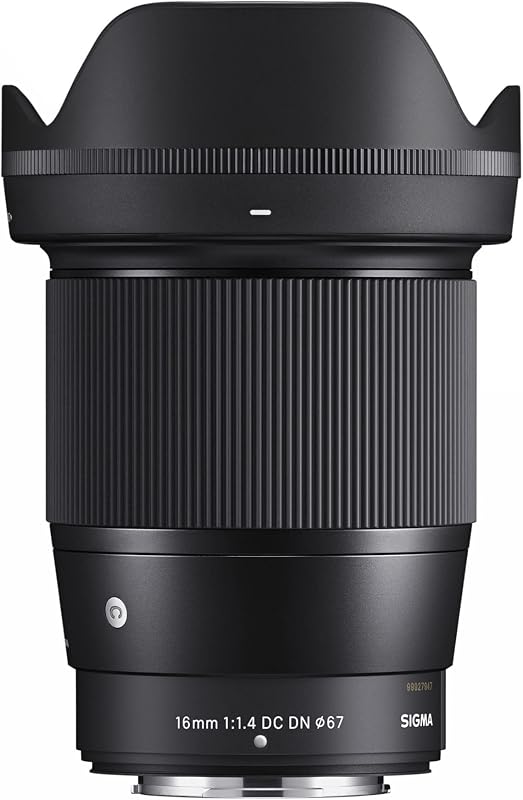
Best for: Low-light street and documentary photographers
Pros
- Fast f/1.4 aperture
- 16 elements optical formula
- Water and dust proof coupling
Cons
- Fixed wide focal length
- Larger prime profile
| Lens Model | Focal Range | Maximum Aperture | Optical Stabilization | Optical Construction |
|---|---|---|---|---|
| Sigma 16-300mm F3.5-6.7 DC OS | 16–300mm | f/3.5–6.7 | Optical (OS) | Not listed |
| Sigma 18-50mm f 2.8 DC DN | 18–50mm | f/2.8 | Not listed | Not listed |
| Sigma | 16mm | f/1.4 | Optical | 16 elements in 13 groups |
| Sigma 16-300mm f 3.5-6.7 DC OS | 16–300mm | f/3.5–6.7 | Optical Stabilization | Not listed |
| Sigma 15mm f 1.4 DC Contemporary | 15mm | f/1.4 | No image stabilization | 13 elements in 11 groups |
Table from this guide — scroll sideways for the remaining columns.
Sigma 16-300mm F3.5-6.7 DC OS for All-In-One Reach


Sigma 16-300mm F3.5-6.7 DC OS 4 photos from the Amazon listing

Best for: Outdoor explorers requiring sealed superzoom coverage
Pros
- All-in-one 16-300mm reach
- Weather-resistant rubber sealing
- Physical zoom lock switch
Cons
- Dim maximum telephoto aperture
- Curated bundle requires verification
Best for: Travel photographers needing maximum focal versatility
Pros
- 8:1 zoom ratio
- Built-in optical image stabilization
- Extensive 16-300mm focal range
Cons
- Slow f/6.7 telephoto aperture
- Variable aperture design
The Sigma 16-300mm F3.5-6.7 DC OS is engineered as a comprehensive telephoto superzoom designed to tackle extreme focal variation without necessitating field lens swaps. Built for the Fujica X mount system, this all-in-one zoom optic achieves a massive 18.8:1 zoom ratio, initiating at a wide 16mm focal length and extending entirely through to 300mm. The 16mm minimum focal length yields an expansive 84-degree real angle of view, giving photographers the wide-field perspective required for environmental landscapes before rotating through the focal scale to isolate distant subjects at the 300mm telephoto boundary.
Operating across a variable maximum aperture of f/3.5 at the wide end to f/6.7 at full extension, this lens incorporates integrated Optical Stabilization (OS) to counteract motion blur at extended focal lengths. The listing specifies autofocus functionality with dedicated all-in-one zoom coatings designed to protect surface elements. In terms of mechanical versatility, this superzoom mirrors the expansive reach often evaluated by photographers comparing alternative platforms like tamron sony e mount lenses, providing a self-contained optical package that minimizes sensor dust exposure by eliminating lens changes in dynamic environments.
This model is exceptionally well-suited for expedition photographers, travel documentarians, and outdoor enthusiasts who require immediate access to wide, standard, and extreme telephoto framing in a single chassis. However, shooters demanding uniform low-light exposure or shallow depth of field will find that the variable f/3.5-6.7 aperture gives way to the faster, fixed-aperture standard zoom options in the lineup.
Sigma 18-50mm f 2.8 DC DN for Everyday Versatility




Sigma 18-50mm f 2.8 DC DN 4 photos from the Amazon listing
Best for: Everyday generalist shooting and content creation
Pros
- Constant f/2.8 maximum aperture
- Compact mirrorless form factor
- Included filter and cleaning bundle
Cons
- No listed optical stabilization
- Limited 50mm telephoto reach
The Sigma 18-50mm f 2.8 DC DN serves as a primary standard zoom workhorse, specifically formulated for mirrorless APS-C camera bodies. Covering an 18mm to 50mm focal spectrum—which corresponds to an equivalent 27mm to 75mm range in full-frame 35mm terms—this optic delivers standard wide-to-portrait field flexibility. Its primary technical asset is an unchanging, constant f/2.8 maximum aperture throughout the entirety of its zoom range, maintaining consistent exposure settings and background separation whether shooting environmental portraits or tighter compositions.
Designed as part of the Contemporary series, this lens features an autofocus system compatible with both AF and MF drive modes, with an aperture range closing down to f/22 for maximum depth of field. The listing indicates that this specific offering is supplied as a complete accessory bundle, incorporating manufacturer components alongside a 3-piece filter kit, a 6-piece gradual filter set, a lens pen, a dust blower, and an essential maintenance starter kit. The listing does not specify internal optical stabilization, shifting the stabilization burden to camera bodies equipped with in-body image stabilization (IBIS).
For generalist creators, vloggers, and street photographers seeking the best sigma lenses for fuji x mount bodies, the sigma 18-50mm f 2.8 dc dn fujifilm configuration presents an ideal balance between optical speed and portability. It yields substantial low-light benefits over variable-aperture superzooms, though it concedes extensive telephoto reach past 50mm.
Sigma for Wide-Angle Low-Light Capture
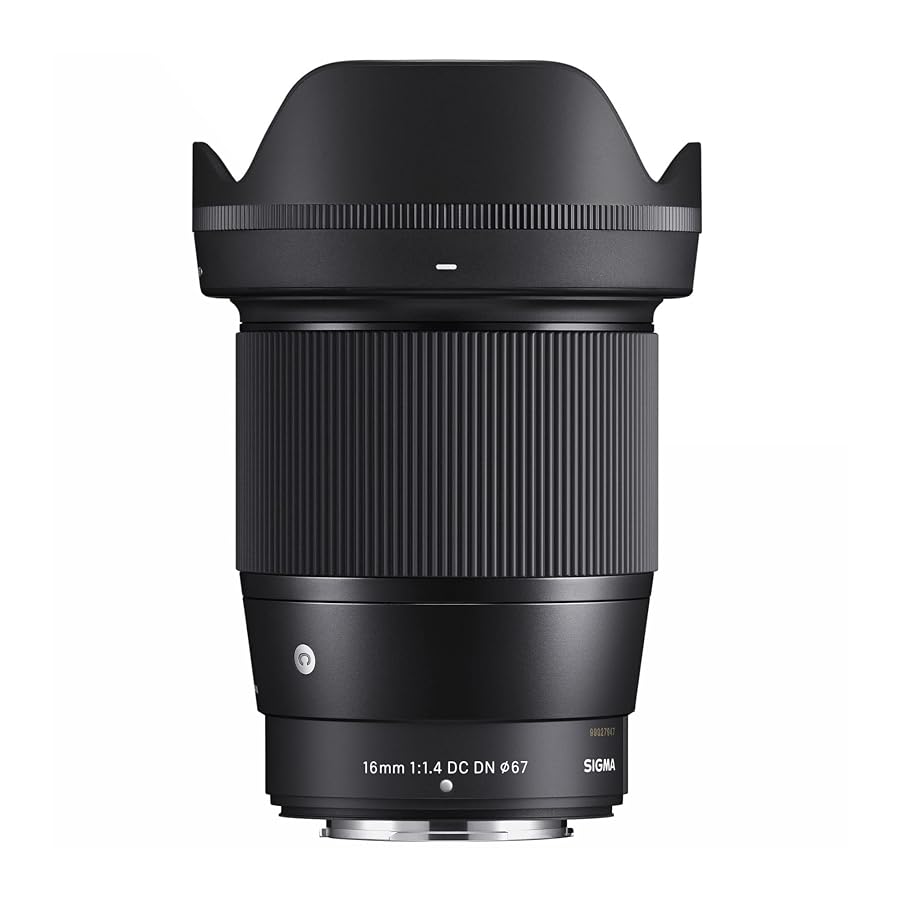


Sigma - 16mm-F/1.4 (C) AF DC DN Lens, Fuji 4 photos from the Amazon listing
The Sigma 16mm-F/1.4 (C) AF DC DN lens is a dedicated prime optic engineered for wide-angle precision and maximum low-light performance. Manufactured in Japan, this prime lens features a sophisticated optical architecture containing 16 individual elements organized into 13 groups. To maintain contrast and eliminate secondary optical aberrations, the optical formula integrates high-quality glass elements treated with a Super Multi-Layer Coating, ensuring crisp rendering across its wide 83.2-degree real angle of view.
Featuring a bright f/1.4 maximum aperture, this optic allows substantial light gathering in dim interiors and night environments, rendering smooth out-of-focus background elements. The listing specifications explicitly identify optical image stabilization alongside autofocus functionality, coupled with water- and dust-proof coupling at the mount interface to prevent environmental contamination. The technical execution of its optical formula demonstrates how modern prime designs diverge from vintage legacy systems like canon ef mount lenses by optimizing element density directly for mirrorless sensor cover glass.
This prime is a premier option for architectural photographers, landscape shooters, and low-light event documentarians working within the sigma 16mm f1.4 dc dn x mount ecosystem. Because it is locked at a fixed 16mm focal point, it cedes all zooming flexibility, functioning as a specialized resolving tool rather than an all-in-one generalist optic.
Sigma 16-300mm f 3.5-6.7 DC OS for Travel Bundles


Sigma 16-300mm f/3.5-6.7 DC OS Contemporary Lens for Fujifilm 4 photos from the Amazon listing
The Sigma 16-300mm f 3.5-6.7 DC OS Contemporary package offers an expansive telephoto zoom reach paired with dedicated field accessories. Spanning the entire 16mm to 300mm focal spectrum, this lens is engineered to eliminate internal reflections through an optical design tested and adjusted to suppress flare and minimize ghosting in harsh lighting. To handle adverse weather conditions in the field, the chassis incorporates dust- and splash-resistant seals at vulnerable entry points.
A physical zoom lock switch is located at the wide end of the barrel, preventing unintentional barrel extension (zoom creep) when carrying the optic mounted or stored in a field bag. As detailed in the listing data, this product is configured as a curated accessory bundle featuring standard in-box components alongside a Hurricane Blower and an Essential Cleaning Kit. The package provides the physical maintenance tools required to keep the front element clear of moisture, sand, and dust during outdoor deployment.
Photographers prioritizing comprehensive field security and focal versatility will appreciate the integrated environmental sealing and mechanical zoom lock of this sigma 16-300mm dc os fujifilm configuration. It is built specifically for safari, travel, and adventure photography where changing lenses is impractical, though users must manage exposure carefully when reaching the f/6.7 telephoto ceiling.
Sigma 15mm f 1.4 DC Contemporary for Astrophotography and Landscapes


Sigma 15mm f/1.4 DC Contemporary Lens for Fujifilm X 4 photos from the Amazon listing
Best for: Astrophotographers and wide-angle architecture specialists
Pros
- Ultra-fast f/1.4 maximum aperture
- Featherweight 225-gram chassis
- FLD and SLD glass elements
Cons
- No internal image stabilization
- Listing notes mount discrepancies
The Sigma 15mm f 1.4 DC Contemporary lens represents an ultra-wide, ultra-fast prime configuration tailored for extreme optical resolving power. The optical diagram comprises 13 elements arranged across 11 groups, utilizing specialized FLD, SLD, and aspherical glass elements to curb spherical and chromatic aberrations. With an expansive 83.6-degree angle of view and an ultra-bright f/1.4 maximum aperture, this lens excels at gathering light across astrophotography frames, low-light landscape vistas, and tight interior architecture.
Weighing 7.9 ounces (225 grams) and utilizing a 58mm (5.8 centimeter) front filter thread, this optic remains remarkably compact. The exterior construction features dustproof and splashproof sealing, alongside an internal autofocus mechanism designed for swift, silent tracking in both still photography and video capture. The listing specifications note that this optic does not feature image stabilization; furthermore, while the listing title identifies the lens for Fujifilm X, the detailed specification block lists the compatible camera mount as Sigma and the product description references Canon RF, meaning detail-oriented shoppers should confirm mount pinouts prior to ordering.
For astrophotographers and landscape specialists scrutinizing sigma x mount prime lens specs, the 15mm f/1.4 offers wider framing and specialized glass elements compared to standard wide zooms. Its fixed perspective requires physical recomposition, but the f/1.4 light-gathering capability is unmatched across the zoom categories.
How to Choose the Right Sigma Camera Lenses
Selecting the ideal model among fujifilm x mount sigma zoom lenses and prime optics requires evaluating the mechanical and optical trade-offs inherent to lens design. The first critical factor is focal range versus optical compromise. The 16-300mm superzooms provide unrivaled 18.8:1 versatility, making them ideal for wildlife or travel where carrying multiple optics is unfeasible. However, maintaining that focal breadth necessitates a variable maximum aperture tapering down to f/6.7 at 300mm, requiring bright daylight or higher sensor sensitivity. Conversely, standard zooms like the 18-50mm trade telephoto reach for an unwavering f/2.8 maximum aperture, ensuring uniform exposure values across the frame.
The second consideration involves prime light-gathering speed versus zoom convenience. Both the 15mm and 16mm prime lenses feature ultra-wide f/1.4 apertures, transmitting substantially more light than an f/2.8 or variable-aperture zoom. This distinction is paramount for astrophotography, night street documentation, and high-shutter-speed event capture. While modern hybrid shooters often compare lens behavior across different systems such as nikon mirrorless cameras z mount setups, native APS-C wide primes remain the gold standard for minimal optical aberrations and wide field capture.
Physical stabilization and environmental protection also serve as definitive selection criteria within the sigma contemporary lenses fuji x collection. While the 16-300mm models incorporate dedicated optical stabilization (OS) to neutralize hand movement at extreme focal lengths, the compact 15mm prime explicitly lacks optical stabilization, depending entirely on sensor-shift systems within camera bodies. Additionally, buyers operating in challenging field environments must consider chassis sealing: the 15mm prime and 16-300mm bundled models include dust- and splash-resistant sealing, whereas standalone generalist zooms require greater care in inclement conditions.
FAQ
Which Sigma X-mount lens is best for low-light photography?
The prime lenses featuring an f/1.4 maximum aperture—specifically the 15mm f/1.4 and the 16mm f/1.4—are the top choices for low-light shooting. Their large maximum aperture permits substantially higher light transmission onto the camera sensor compared to f/2.8 standard zooms or variable f/3.5-6.7 superzooms, allowing faster shutter speeds and lower sensor gain settings in dim environments.
Does the Sigma 18-50mm f/2.8 lens feature internal optical stabilization?
The specifications for the Sigma 18-50mm f/2.8 DC DN listing do not specify built-in optical image stabilization. Photographers relying on optical shake reduction should pair this standard zoom with camera bodies that feature integrated in-body image stabilization (IBIS) to mitigate handheld motion blur at slower shutter speeds.
What advantages does a prime lens offer over a superzoom?
Prime lenses, such as the 15mm f/1.4 and 16mm f/1.4, are engineered around a fixed focal length, allowing optical designers to optimize element groups for edge-to-edge sharpness, minimal chromatic aberration, and wider maximum apertures. Superzooms, like the 16-300mm models, offer immense focal convenience across an 18.8:1 ratio but require optical compromises, including slower variable maximum apertures and larger internal element groupings.
Are Sigma Contemporary lenses weather sealed against the elements?
Weather sealing varies across individual models within the lineup. The 16mm f/1.4 listing highlights a water- and dust-proof coupling at the lens mount, while the Sigma 16-300mm bundle listing and the 15mm f/1.4 specification highlight dust- and splash-resistant seals. Generalist models like the 18-50mm listing highlight high build quality and durability, but do not explicitly detail sealed gaskets.
Why does the 16-300mm lens include a physical zoom lock switch?
The Sigma 16-300mm f/3.5-6.7 incorporates a mechanical zoom lock switch at its widest 16mm position to prevent zoom creep. Because superzoom barrels contain heavy internal element groups that travel along an extensive physical throw, gravitational pull can cause the barrel to unintentionally extend outward while walking or carrying the camera on a strap.


