As Amazon Associates, we earn from qualifying purchases. This means we may receive a small commission at no extra cost to you if you click through and make a purchase.
Sony has long maintained a dominant presence in the imaging industry by scaling specialized sensor architectures, rapid autofocus motors, and high-precision optics down into pocket-sized form factors. From their stacked CMOS engineering and advanced Real-time Eye AF algorithms to classic CCD snapshot platforms, the brand designs hardware tailored to rigorous visual demands without demanding the physical footprint of full-sized studio gear. Whether configuring an ultracompact chassis for field reportage, daily documentation, or dedicated video workflows, evaluating the physical optical assemblies and digital signal processors reveals how Sony balances portability against technical capture capability.
Across this lineup, the hardware diverges sharply between vintage CCD-based point-and-shoot bodies like the DSC-W330 and the entry-level Sony DSC-W800 built for basic focal flexibility, fixed-lens 1-inch sensor platforms like the ZV-1F and RX100 VII tuned for high-speed tracking and 4K recording, and the interchangeable E-mount ZV-E10 featuring an expansive APS-C sensor format.
Sony Small Digital Cameras Compared

Best for: Budget users seeking simple operation
Pros
- 5x optical zoom Sony lens
- Optical SteadyShot stabilization
- Simplified Easy Mode menus
Cons
- Limited to 720p HD movie
- Automatic-only exposure
| Model | Sensor Type & Size | Lens & Focal Length | Video & Stabilization | Shutter & Exposure |
|---|---|---|---|---|
| Sony ZV-1F Compact Digital Camera 4K | 20.1 MP 1-inch CMOS | 20mm Prime (F2.0) | 4K MP4 (Digital Stabilization) | 1/32000 to 1/16000 sec; Manual |
| Sony DSC-W330 14.1MP Digital Camera | 14.1 MP 1/2.3-inch CCD | 26mm Carl Zeiss (4x Optical Zoom) | Standard Definition (Digital SteadyShot) | 1/1600 to 2 sec; Shutter Priority |
| Sony RX100 VII Premium Compact Camera | 20.1 MP 1.0-Type Stacked CMOS | 24-200mm Zeiss Vario-Sonnar T* (F2.8-4.5) | 4K HDR with S-Log3 (Optical & Digital) | 1/32000 to 30 sec; Manual |
| Sony | 20.1 MP 1/2.3-inch Super HAD CCD | Sony Lens (5x Optical Zoom) | 720p HD Movie (Optical SteadyShot) | 1/1500 to 2 sec; Automatic |
| Sony ZV-E10 APS-C Mirrorless Camera | 24.2 MP APS-C Exmor CMOS | Sony E-Mount (Includes 16-50mm F3.5) | 4K Oversampled from 6K (Dual & Optical) | 1/4000 to 30 sec & Bulb; Auto & Manual |
Table from this guide — scroll sideways for the remaining columns.
Sony ZV-1F Compact Digital Camera 4K for Ultra-Wide Vlogging


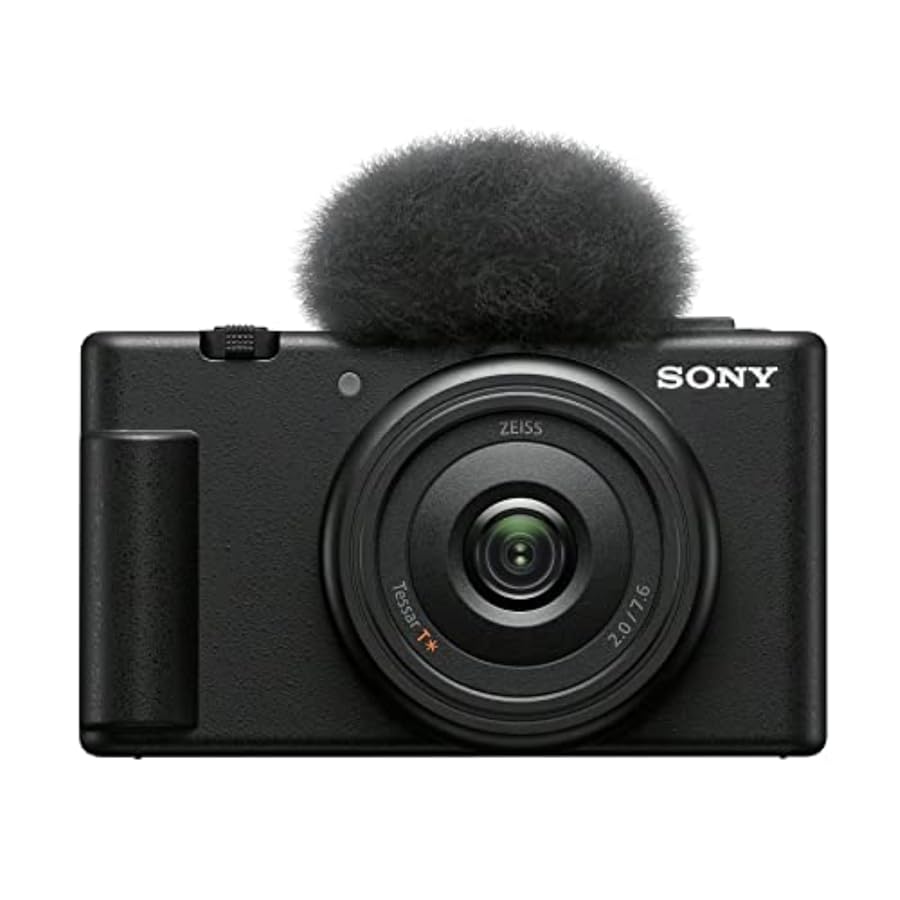

Sony ZV-1F Compact Digital Camera 4K 4 photos from the Amazon listing
Best for: Vloggers needing ultra-wide 4K video
Pros
- Ultra-wide 20mm F2 lens
- Large 1-inch CMOS sensor
- Directional 3-capsule mic
Cons
- Digital-only stabilization
- Fixed focal length
The Sony ZV-1F Compact Digital Camera 4K is engineered as a dedicated visual production platform aimed directly at solo creators, vloggers, and streamers who require an expansive perspective without packing bulky secondary gear. Built around a generous 20.1-megapixel 1-inch CMOS image sensor paired with an ultra-wide fixed 20mm equivalent focal length, this camera eliminates the tight, claustrophobic framing common to handheld recording. The bright F2 maximum aperture allows significant optical background defocusing while letting in substantial ambient light, yielding clean separation between the subject and the ambient environment even in dim recording conditions.
Autofocus performance relies on Sony’s sophisticated Eye-AF and tracking technology, which locks onto human subjects to preserve pin-sharp facial definition through active movement. Framing and parameter management are handled via a responsive side-articulating touchscreen LCD that flips out entirely to support intuitive selfie orientation and high-or-low-angle monitoring. Audio capture is similarly prioritized with an onboard directional 3-capsule microphone array augmented by a supplied clip-on windscreen accessory, capturing crisp speech while diminishing environmental wind noise. The device records MP4 video files at a native 16:9 aspect ratio and utilizes digital image stabilization to steady walking footage.
With an expanded ISO sensitivity floor of 100, manual exposure control, and an electronic shutter speed range stretching between 1/16000 and 1/32000 seconds, the ZV-1F gives precise mechanical command over harsh daylight exposures. This fixed-prime unit serves creators who want an effortless arm’s-length wide shot, though shooters who demand true optical telephoto magnification or raw image capture will find a more capable alternative in the multi-focal RX100 VII.
Sony DSC-W330 14.1MP Digital Camera for Pocket Optical Zoom Snapshots


Sony DSC-W330 14.1MP Digital Camera 2 photos from the Amazon listing
Best for: Casual shooters wanting pocket optical zoom
Pros
- 4x Carl Zeiss optical zoom
- SteadyShot blur reduction
- Dual SD and Memory Stick slot
Cons
- 1/1600 second top shutter
- Standard definition video
The Sony DSC-W330 14.1MP Digital Camera represents Sony’s classic ultracompact CCD era, delivering pocketable convenience and glass-based optical flexibility for straightforward everyday photography. At the core of the chassis is a 14.1-megapixel 1/2.3-inch CCD image sensor that renders images with the distinctive color characteristics and organic grain profile intrinsic to CCD architecture. Paired with a 26mm wide-angle Carl Zeiss Vario-Tessar lens offering 4x optical zoom, this camera allows shooters to frame architectural vistas or zoom into mid-range subjects without encountering the digital degradation of basic phone crops.
Image stabilization is supported through Sony’s Digital SteadyShot system, which actively combats handshake to mitigate capture blur across standard handheld shutter durations. The camera is equipped with an Intelligent Auto (iAuto) engine that dynamically optimizes camera exposure settings based on detected ambient conditions, alongside specialized Smile Shutter technology engineered to release the shutter automatically when a subject smiles. Photographers reviewing their captures navigate via a clear 3.0-inch LCD screen displaying a 230,000-pixel preview, while media storage accommodates flexibility through an onboard card slot compatible with both SD media and proprietary Memory Stick Duo formats. When evaluating older vintage digital gear, readers often compare this CCD platform against a sony cybershot 16.1 megapixel model to analyze megapixel density and sensor dimensions.
Technical shooting specifications include an expanded ISO minimum of 80, Shutter Priority exposure control, JPEG capture format, a native 3:2 aspect ratio, and a shutter speed range executing between 2 seconds and 1/1600 second. This model remains ideal for collectors and retro-enthusiasts desiring true vintage point-and-shoot color rendition with physical zoom glass, though it naturally yields to modern 4K platforms when rapid autofocus or high-definition digital cinema workflows become necessary.
Sony RX100 VII Premium Compact Camera for High-Speed Telephoto Performance


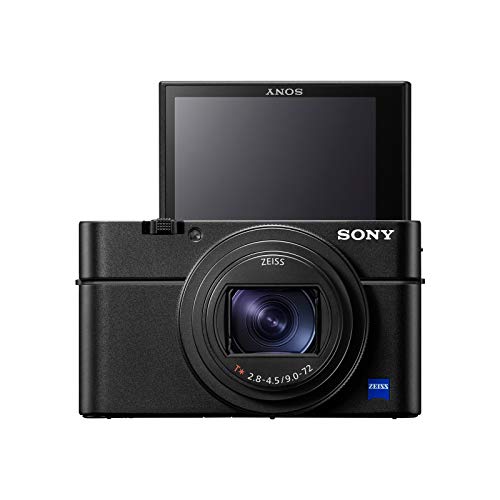

Sony RX100 VII Premium Compact Camera 4 photos from the Amazon listing
Best for: Demanding photographers wanting telephoto speed
Pros
- 24-200mm Zeiss zoom lens
- Up to 20 fps blackout-free
- 357-point phase-detection AF
Cons
- F2.8-4.5 variable aperture
- Higher operational complexity
The Sony RX100 VII Premium Compact Camera serves as an elite benchmark in miniature camera engineering, compressing the speed, tracking algorithms, and computational power of professional full-frame bodies into a jacket-pocket enclosure. Driving the system is a 20.1-megapixel 1.0-type stacked CMOS sensor integrated with dedicated DRAM memory. Fronting this stacked sensor is an expansive Zeiss Vario-Sonnar T* 24-200mm equivalent optical zoom assembly featuring an F2.8 to F4.5 variable maximum aperture, packing genuine telephoto capability into a remarkably diminutive shell.
Autofocus speed achieves an extraordinary 0.02-second response time, powered by an intricate hybrid array consisting of 357 focal-plane phase-detection AF points backed by 425 contrast-detection points. The computational architecture supports up to 20 frames-per-second blackout-free continuous shooting, sustained by up to 60 continuous AF/AE calculations per second, alongside a single-burst mode executing at 90 fps. The camera incorporates advanced AI-based Real-time Tracking and Real-time Eye AF for humans across stills and video, as well as dedicated animal eye tracking for still photography. Video capabilities include 4K HDR (HLG) movie recording utilizing an S-Log3 gamma profile, interval shooting for time-lapse creation, a dedicated 3.5mm external microphone jack, and vertical video orientation flagging.
Stabilization operates through Active Mode SteadyShot combining optical lens shift with digital correction to guarantee stable 4K recording. The exposure architecture accommodates an expanded ISO base of 64, full manual exposure control, a versatile shutter speed spectrum running from 30 seconds up to 1/32000 of a second, and multi-format aspect ratio selection across 16:9, 3:2, and 4:3 in both RAW and JPEG formats. This camera represents the definitive tool for traveling documentary photographers who require extended focal reach and pro-grade tracking, handing off only to the ZV-E10 for shooters who must mount wide-aperture cinema prime lenses.
Sony for Straightforward CCD Point-and-Shoot Simplicity


Sony (DSCW800) 20.1 MP Digital Camera (Silver) 4 photos from the Amazon listing
The Sony DSC-W800 is a dedicated point-and-shoot compact designed to deliver fuss-free operation, dependable optical zoom, and lightweight carrying convenience. The imaging foundation relies on a 20.1-megapixel (20.4 MP listed) Super HAD CCD sensor built within a 1/2.3-inch footprint. This sensor architecture captures high-resolution still frames with rich tonal contrast, pairing seamlessly with a genuine Sony lens that features a versatile 5x optical zoom range bolstered by a 10x Clear Image digital zoom extension.
A primary technical highlight of this silver pocket chassis is the inclusion of true optical SteadyShot image stabilization. By utilizing a physical gyroscopic mechanism to counter small hand tremors, the system preserves sharpness across both still photos and dedicated 720p HD movie captures far more effectively than purely electronic smoothing. Camera operation is intentionally streamlined through an Easy Mode option, which simplifies the on-screen menu typography and locks out confusing sub-settings so users can focus on straightforward point-and-shoot framing via the 2.7-inch rear LCD. When analyzing vintage point-and-shoot options across classic lineups, shoppers researching a sony syber shot camera often assess the balance between resolution, optical reach, and physical stabilization found on this model.
Supported technical parameters include JPEG image output, 16:9 and 4:3 aspect ratios, an expanded ISO minimum of 100, an automatic exposure system, a maximum aperture of 3.5 millimeters, and shutter timing ranging from 2 seconds down to 1/1500 second. The DSC-W800 is optimized for budget-conscious families and travelers wanting basic, dependable optical zoom without navigating deep software menus, though it gives way to the ZV-1F or RX100 VII when 4K resolution or manual shutter calibration is mandated.
Sony ZV-E10 APS-C Mirrorless Camera for Interchangeable-Lens Video Creation
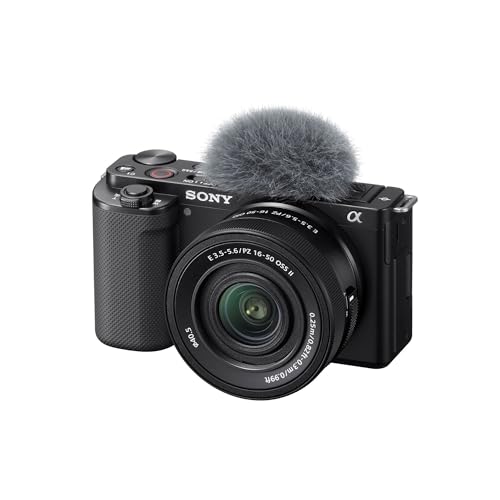


Sony ZV-E10 APS-C Mirrorless Camera with 16-50mm Lens Black 4 photos from the Amazon listing
Best for: Creators prioritizing large APS-C image quality
Pros
- Large 24.2MP APS-C sensor
- Interchangeable Sony E-mount
- 4K oversampled from 6K
Cons
- Larger footprint with lenses
- 1/4000 second mechanical limit
The Sony ZV-E10 APS-C Mirrorless Camera elevates compact creator hardware by incorporating a massive 24.2-megapixel APS-C Exmor CMOS sensor and a fast BIONZ X image processor into a compact, vlog-optimized mirrorless body. Supplied with a retractable 16-50mm F3.5-5.6 power zoom lens, this camera combines the physical benefits of the Sony E-mount interchangeable ecosystem with the travel footprint of a compact body. The substantially larger APS-C sensor surface gathers vastly more physical light than 1-inch or 1/2.3-inch chips, yielding deeper dynamic range, cleaner low-noise capture at high ISO levels, and rich, natural background bokeh.
Video processing is exceptional: the camera records 4K video oversampled from a full 6K capture area with complete pixel readout and zero pixel binning, resulting in remarkable fine-detail rendering. Content creators benefit from dedicated workflow tools, including the Product Showcase Setting—which swiftly pulls focus from a creator’s face to an item held toward the lens—and a one-touch physical Background Defocus button that toggles between crisp and blurred background depths. The camera features a flip-out side-articulating vari-angle LCD, comprehensive external audio connections, and native USB live streaming capability that outputs video and audio over a single computer cable without capture cards. Dual and optical image stabilization ensures steady tracking through unpredictable movements.
Technical specifications confirm support for RAW and JPEG capture across 1:1, 3:2, and 4:3 aspect ratios, expanded ISO performance starting down at ISO 50, both automatic and full manual exposure control, and a mechanical shutter reaching from 30 seconds plus Bulb mode up to 1/4000 second. The ZV-E10 is the superior selection for hybrid shooters wanting cinematic shallow depth-of-field and lens modularity, stepping back only if total pocketability and zero-lens maintenance are required.
How to Choose the Right Sony Small Digital Camera
Selecting the optimal device from Sony’s compact roster requires an understanding of how physical sensor dimensions dictate optical performance, low-light headroom, and dynamic range. The tiny 1/2.3-inch CCD sensors found on the DSC-W330 and DSC-W800 deliver distinct color palettes and compact convenience, but their restricted surface area exhibits higher image noise once ambient light recedes. Stepping up to the 1-inch CMOS sensors on the ZV-1F and RX100 VII offers roughly four times the light-gathering area, expanding dynamic range significantly. At the top of the spectrum, the APS-C Exmor sensor inside the ZV-E10 provides an even larger physical footprint, unlocking genuine cinematic depth-of-field and professional noise mitigation for demanding productions.
Optical construction represents the next critical fork in your technical evaluation. The ZV-1F utilizes a fixed 20mm ultra-wide prime lens with an F2 aperture, which excels at vlogging, street photography, and wide indoor scenes but lacks any mechanical zoom mechanism. If optical reach is necessary, the DSC-W330 and DSC-W800 provide 4x and 5x zooms respectively in pocket-sized chassis. For uncompromising optical versatility, the RX100 VII incorporates a premium Zeiss Vario-Sonnar T* 24-200mm telephoto lens, covering wide angles up to super-telephoto compression. Meanwhile, the ZV-E10 breaks away from fixed optics entirely via its Sony E-mount, enabling users to swap between ultra-fast portrait primes, macro optics, or specialized telephoto zooms as shooting scenarios evolve.
Autofocus architecture and video recording capabilities also establish a sharp boundary across these models. Classic point-and-shoot bodies like the DSC-W330 rely on standard autofocus routines and standard definition video, while the DSC-W800 records up to 720p HD movie files using optical SteadyShot. In contrast, modern video specialists operate on an entirely different computational level. The ZV-1F, RX100 VII, and ZV-E10 all record high-bitrate 4K video, but the RX100 VII stands apart with its stacked sensor calculating 60 AF/AE tracking cycles per second across 357 phase-detection points. The ZV-E10 matches this tracking speed with full-pixel 6K oversampling, making it an exceptional cinema tool. Reviewing our broader technical guide to sony compact digital cameras will help you align these processing platforms against your specific workflow speed.
Finally, consider operational ergonomics and input flexibility. While the DSC-W800 and DSC-W330 rely on fixed rear LCD panels and simplified automatic exposure modes, the ZV-1F and ZV-E10 feature side-articulating screens designed specifically for self-recording and creative high-or-low framing. Furthermore, the ZV-1F provides a high-fidelity 3-capsule mic array, the RX100 VII includes a dedicated 3.5mm microphone jack with vertical orientation recording, and the ZV-E10 supports direct driver-free USB live streaming. Evaluating whether your priority lies in extreme pocket telephoto reach, interchangeable cinema optics, or minimalist budget snapshot simplicity will point you directly to the correct model.
FAQ
Which Sony small digital camera offers the best zoom range?
The Sony RX100 VII Premium Compact Camera offers the most extensive zoom capability among fixed-lens models in this lineup. Its Zeiss Vario-Sonnar T* glass delivers a 24-200mm equivalent focal range with an F2.8-4.5 variable aperture, providing true 8x-plus optical magnification. By comparison, the DSC-W800 features a 5x optical zoom and the DSC-W330 provides a 4x zoom, while the ZV-1F utilizes a fixed 20mm prime lens without optical zoom.
What is the primary difference between Sony CCD and CMOS compact cameras?
The core difference lies in sensor architecture, readout speed, and low-light behavior. The CCD sensors found in models like the DSC-W330 and DSC-W800 utilize global charge transfer, delivering retro color reproduction and low power drain, but they top out at lower ISO values and standard-to-720p video. The CMOS and stacked CMOS sensors in the ZV-1F, RX100 VII, and ZV-E10 offer high-speed electronic pixel readout, superior dynamic range, 4K video capture, and advanced real-time computational tracking.
Can Sony small digital cameras record 4K video with active autofocus?
Yes, modern Sony compact cameras excel at 4K recording with continuous autofocus. The ZV-1F utilizes Eye-AF and tracking technology during 4K MP4 capture, the RX100 VII leverages 357 phase-detection points with Real-time Eye AF in 4K movie mode, and the ZV-E10 captures 4K oversampled from 6K while maintaining continuous hybrid subject and product tracking.
Is the lens interchangeable on all Sony compact digital cameras?
No, only the Sony ZV-E10 features an interchangeable lens system. It utilizes the standard Sony E-mount, allowing photographers to detach the included 16-50mm lens and attach any compatible E-mount prime or zoom lens. The ZV-1F, DSC-W330, RX100 VII, and DSC-W800 all feature permanently integrated, non-removable optical assemblies.
Which Sony pocket camera is best suited for vlogging and content creation?
Content creators prioritizing pocketable simplicity will find the Sony ZV-1F ideal due to its ultra-wide 20mm F2 lens, directional 3-capsule microphone, and side-articulating touchscreen. However, creators seeking professional cinema expansion, interchangeable glass, and oversampled 4K image fidelity will achieve superior production values with the Sony ZV-E10.


