As Amazon Associates, we earn from qualifying purchases. This means we may receive a small commission at no extra cost to you if you click through and make a purchase.
LG has positioned itself as an industry benchmark in display engineering, pioneering high-density self-lit subpixel architectures that yield true zero-level blacks, near-instantaneous pixel response, and unmatched motion clarity. Within the premium desktop sector, the lg ultragear 32 inch oled ecosystem represents the cutting edge of competitive and graphical computing, combining advanced thermal dissipating backplates, microscopic lens refraction systems, and dual-state timing controllers that switch native display scan characteristics on the fly.
While sharing a standard 32-inch form factor, the models within this lineup diverge significantly in panel surface chemistry, interface bandwidth capabilities ranging from legacy DisplayPort 1.4 to next-generation DisplayPort 2.1, and maximum Dual-Mode scan ceilings. Choosing the right display depends heavily on whether your hardware configuration requires uncompressed ultra-high bandwidth, specialized acoustic pane deflection, or a specific anti-glare finish.
LG OLED Gaming Monitors Compared
| Model | Panel Type & Resolution | Native & Dual-Mode Refresh Rate | Peak Brightness & HDR | Primary Connectivity |
|---|---|---|---|---|
| LG 32GX870A-B 32-inch Ultragear 4K UHD | OLED (3840 x 2160) | 4K at 240Hz / FHD at 480Hz | 1300 nits peak, VESA DisplayHDR True Black 400 | DisplayPort 2.1, HDMI, USB Type-C (90W) |
| LG 32GS95UE 32-inch Ultragear OLED Gaming | OLED (3840 x 2160) | 4K at 240Hz / FHD at 480Hz | 275 nits typical, VESA DisplayHDR True Black 400 | DisplayPort 1.4, HDMI 2.1 |
| LG 32GX850A-B 32″ UltraGear 4K UHD | OLED (3840 x 2160) | 4K at 165Hz / FHD at 330Hz | 275 nits typical, VESA DisplayHDR True Black 400 | DisplayPort, HDMI |
| LG 32GS60QC-B Ultragear 32-inch Curved Gaming | VA LED (2560 x 1440) | 180Hz (Fixed) | 300 nits typical, HDR10 | DisplayPort, HDMI x2 |
| LG Ultragear 32GX870A-B 32″ Dual-Mode Gaming | OLED (3840 x 2160) | 4K at 240Hz / FHD at 480Hz | 1300 nits peak, VESA DisplayHDR True Black 400 | DisplayPort 2.1, HDMI 2.1, USB Type-C (90W) |
| LG 32G620B-B 32-inch Ultragear IPS QHD | IPS LED (2560 x 1440) | 200Hz (Fixed) | Not listed, HDR10 | DisplayPort, HDMI |
Table from this guide — scroll sideways for the remaining columns.
LG 32GX870A-B 32-inch Ultragear 4K UHD for High-Bandwidth Esports Rigging


LG 32GX870A-B 32-inch Ultragear 4K UHD 4 photos from the Amazon listing
Best for: Competitive players needing DisplayPort 2.1 bandwidth
Pros
- DisplayPort 2.1 and 90W USB-C connectivity
- 4K 240Hz and FHD 480Hz Dual-Mode
- Peak brightness reaching up to 1300 nits
Cons
- Matte coating softens perceived contrast
The LG 32GX870A-B 32-inch Ultragear 4K UHD establishes a high technical ceiling for desktop visual hardware by combining native 4K pixel density with high-bandwidth display connectivity. Central to its hardware package is the implementation of an lg ultragear displayport 2.1 oled interface alongside USB Type-C supporting single-cable video and device power delivery. The panel incorporates Micro Lens Array+ (MLA+) optical engineering, focusing emitting light forward to hit a typical brightness of 275 nits and an intense peak brightness of up to 1300 nits while preserving an extraordinary 1,500,000:1 contrast ratio.
Performance profiles on this unit are anchored by VESA Certified Dual Mode functionality, enabling users to alternate between a graphically opulent 3840 x 2160 4K UHD render at 240Hz and an ultra-fluid 1920 x 1080 Full HD feed at 480Hz using a hardware hotkey. Pixel state changes resolve in a near-instantaneous 0.03ms Gray-to-Gray (GtG), virtually eliminating trailing artifacts. The matte anti-glare screen treatment defuses ambient room light to maintain black-level integrity in bright environments, backed by an integrated 4-pole audio jack supporting DTS Headphone:X spatialization alongside built-in chassis speakers.
This display is ideal for competitive enthusiasts and content creators running modern discrete graphics processing units capable of leveraging high display pipeline bandwidth. Compared to older interface configurations, the inclusion of modern display inputs reduces reliance on excessive display stream compression. Gamers prioritizing maximum throughput and versatile multi-system desktop routing will find this specific flagship variant to be the premier centerpiece among high-end displays.
LG 32GS95UE 32-inch Ultragear OLED Gaming for Acoustic Screen Immersion


LG 32GS95UE 32-inch Ultragear OLED Gaming Monitor UHD 240Hz 4 photos from the Amazon listing
The LG 32GS95UE 32-inch Ultragear OLED Gaming represents LG’s initial landmark entry into dual-resolution displays, designed for players seeking balanced audiovisual integration directly from the chassis. Instead of standard bottom-mounted or chassis-rear speaker drivers, this model features Pixel Sound technology, which deploys front-facing actuators and an integrated woofer behind the OLED substrate. Sound waves travel directly through the display panel straight toward the operator, creating accurate directional spatial staging enhanced by DTS Virtual:X processing.
Visual presentation is governed by a 31.5-inch active matrix delivering 3840 x 2160 native resolution with a 0.03ms GtG response cycle. Gamers utilize the lg 32 oled 240hz 480hz switching mechanism to alternate between 4K 240Hz fidelity and a competitive Full HD 480Hz scan ceiling. Display synchronization is governed by certified NVIDIA G-SYNC Compatibility and AMD FreeSync Premium Pro over dual HDMI 2.1 ports and a DisplayPort 1.4 connection, with visual performance meeting strict VESA DisplayHDR True Black 400 benchmarks with 98.5% DCI-P3 gamut coverage.
This chassis serves PC gamers who want an uncluttered battle station free from bulky desktop speaker setups without sacrificing dual-state motion clarity. Shoppers who do not require next-generation video transmission interfaces like DP 2.1 will appreciate the balanced execution of this display, though builders needing single-cable USB-C display pathways will look toward the newer GX-series alternatives.
LG 32GX850A-B 32″ UltraGear 4K UHD for Glossy Screen Visual Clarity


LG 32GX850A-B 32" UltraGear 4K UHD 4 photos from the Amazon listing
Best for: Visual purists wanting a glossy optical finish
Pros
- Glossy anti-glare screen surface clarity
- Dual-Mode 4K 165Hz and FHD 330Hz
- Triple UL-certified eye comfort ratings
Cons
- Lower maximum refresh rate than flagship models
For purists seeking absolute optical transparency without the micro-diffusive etching of traditional gaming panels, the LG 32GX850A-B 32″ UltraGear 4K UHD introduces an authentic lg glossy oled gaming monitor aesthetic to the UltraGear series. The smooth screen surface prevents specular scatter, maximizing perceived contrast and edge crispness from its 0.18mm pixel pitch. This optical clarity is backed by three distinct UL certifications covering Anti-Glare, Flicker-Free, and Low Blue Light performance to mitigate optical fatigue across prolonged desktop sessions.
Under the chassis, the display leverages Micro Lens Array+ technology to hit 275 nits of typical luminance alongside a 1,500,000:1 contrast ratio and 98.5% DCI-P3 coverage. Rather than targeting the 240Hz tier, this monitor operates a specialized Dual-Mode timing structure: a native 4K UHD mode running up to 165Hz, and a high-speed Full HD mode reaching 330Hz via hotkey. Coupled with an ultra-fast 0.03ms GtG response speed, tearing is mitigated across both refresh tiers via certified AMD FreeSync Premium Pro and NVIDIA G-SYNC compatibility.
This monitor suits simulation hobbyists, creative professionals, and RPG enthusiasts who value image clarity, deep black saturation, and rich color reproduction over bleeding-edge esports frame rates. If your system cannot reliably sustain 240 frames per second at 4K resolution, this 165Hz/330Hz configuration provides exceptional visual balance, offering a distinct visual profile compared to an ultra-wide alternative like a 39” ultragear wqhd 240hz curved gaming monitor.
LG 32GS60QC-B Ultragear 32-inch Curved Gaming for Immersive 1000R Radius Simulators


LG 32GS60QC-B Ultragear 32-inch Curved Gaming 4 photos from the Amazon listing
Best for: Cockpit simulator setups wanting aggressive curvature
Pros
- Immersive 1000R curved display radius
- Deep 3000:1 native VA contrast ratio
- Smooth 180Hz refresh rate at 1440p
Cons
- Non-OLED panel with 1ms response
Stepping outside self-lit OLED hardware, the LG 32GS60QC-B Ultragear 32-inch Curved Gaming presents an aggressive physical design centered around a steep 1000R curved form factor. The curvature matches the human field of view, pulling the outer boundaries of the 2560 x 1440 QHD raster into the player’s peripheral vision. Unlike its flat-plane siblings, this unit relies on a transmissive VA LED panel engineered to provide a robust 3000:1 static contrast ratio and 300 nits of typical brightness.
Motion performance is optimized for enthusiast tiers, delivering a 180Hz refresh rate and a 1ms GtG response cycle backed by AMD FreeSync adaptive synchronization. Visual processing includes HDR10 decode, 99% sRGB color gamut replication, and proprietary gaming optimizations such as Dynamic Action Sync for input lag reduction and Black Stabilizer for shadow luminance tuning. Physical connectivity is anchored by two HDMI ports and a DisplayPort connection integrated into a tilt-adjustable, borderless housing.
This model is built specifically for cockpit simulators, driving games, and budget-conscious setups that thrive on dramatic physical wrap-around rather than 4K resolution. While it yields the deep black levels and extreme pixel speeds inherent to OLED, it delivers high static contrast and wrap-around immersion for users who prefer curved screens over flat panels.
LG Ultragear 32GX870A-B 32″ Dual-Mode Gaming for Complete Workstation Integration


LG Ultragear 32GX870A-B 32" Dual-Mode Gaming 4 photos from the Amazon listing
Best for: Multi-device battlestations requiring complete accessories
Pros
- Integrated KVM switch and USB-C hub
- DisplayPort 2.1 and HDMI 2.1 inputs
- Bundled display cleaning kit and ties
Cons
- Substantial desk footprint required
The LG Ultragear 32GX870A-B 32″ Dual-Mode Gaming package provides the core 32GX870A-B display bundled with essential workstation maintenance and setup accessories, including an HDMI cable, cable ties, and an LCD cleaning kit. The monitor features the flagship 3840 x 2160 panel, driven by Micro Lens Array+ technology delivering up to 1300 nits peak brightness and DisplayHDR True Black 400 certification. Listing specifications report a glossy screen finish for this bundled entry, pairing vibrant color performance with 1.07 billion displayable colors and 98.5% DCI-P3 spectrum reproduction.
The operational foundation is defined by the versatile lg 32 inch 4k oled dual mode architecture, allowing instant toggling between 4K UHD 240Hz fidelity and a 480Hz Full HD raster with zero motion smear via 0.03ms pixel transitions. Advanced productivity features set this model apart, including an integrated KVM switch and a USB 3.2 Gen 1 hub. DisplayPort 2.1, HDMI 2.1, and an all-in-one USB Type-C port delivering up to 90W of continuous power delivery allow operators to anchor a high-powered gaming desktop and a mobile laptop to the same display station without auxiliary docking hardware.
This configuration is ideal for power users who bridge serious workstation tasks with high-tier competitive gaming. It eliminates desk clutter by integrating power delivery, high-speed device swapping, and dual-mode frame rates into a single display. For users running dual setups who require top-tier specifications and practical out-of-the-box accessories, this bundle delivers comprehensive utility.
LG 32G620B-B 32-inch Ultragear IPS QHD for High-Frame Rate Balance


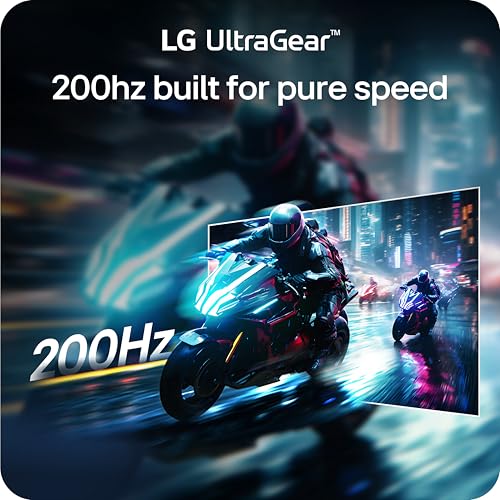
LG 32G620B-B 32-inch Ultragear IPS QHD 200Hz 1ms G-Sync 4 photos from the Amazon listing
Best for: High-frame-rate players preferring flat IPS panels
Pros
- Fluid 200Hz native scan rate
- Broad viewing angles from IPS matrix
- NVIDIA G-SYNC Compatible certified
Cons
- Lacks Dual-Mode frequency switching
The LG 32G620B-B 32-inch Ultragear IPS QHD provides a traditional planar alternative within the 32-inch category, using an In-Plane Switching (IPS) liquid crystal layout instead of self-lit OLED or curved VA glass. By utilizing a flat 2560 x 1440 QHD canvas, it balances high pixel density with graphics card rendering demands, letting mid-tier GPUs drive high frame rates without excessive system strain. The panel features a matte screen surface that effectively diffuses ambient reflections across wide viewing angles.
Motion handling is engineered around an overclocked 200Hz native refresh cycle backed by a 1ms GtG pixel transit time. Tear prevention is managed by official NVIDIA G-SYNC Compatibility alongside AMD FreeSync Premium. The monitor covers up to 99% of the sRGB color gamut with HDR10 signal handling, complemented by LG gaming firmware tools such as the Dynamic Action Sync engine, hardware-level Crosshair overlays, and Black Stabilizer shadow illumination adjustments.
This display suits players who want competitive frame rates and dependable IPS color stability without managing the burn-in mitigations or premium budgets associated with organic light-emitting displays. It offers a reliable, fast-refresh option for competitive multiplayer shooters, serving as a larger alternative to an lg gaming monitor 27 while retaining accessible hardware requirements.
How to Choose the Right LG OLED Gaming Monitor
Selecting the best model requires balancing display interface bandwidth, panel surface treatments, refresh rate ceilings, and audio configurations. Reviewing an lg ultragear 32 inch oled comparison reveals that not every display in this form factor targets identical performance metrics. Shoppers deciding which lg ultragear 32 inch oled to buy should evaluate the following structural specifications across the catalog.
- Dual-Mode Frequencies and Bandwidth: Flagship displays such as the LG 32GX870A-B and LG 32GS95UE provide an advanced Dual-Mode configuration capable of delivering 4K at 240Hz or Full HD at 480Hz. If your primary library focuses on atmospheric campaigns or simulation, the 165Hz 4K and 330Hz FHD profile of the LG 32GX850A-B delivers fluid performance at a more accessible refresh threshold. Furthermore, the inclusion of DisplayPort 2.1 on the 32GX870A-B provides higher native pipe bandwidth for newer GPUs compared to DisplayPort 1.4 connections using Display Stream Compression (DSC).
- Screen Coatings and Lighting Environments: Surface finish plays a pivotal role in perceived contrast and clarity. The LG 32GX850A-B uses a glossy panel that maximizes sharpness, color vibrancy, and deep black reproduction, though it requires controlled ambient lighting to minimize reflections. Conversely, the matte anti-glare coatings on the 32GS95UE and standard 32GX870A-B diffuse harsh overhead lights and glare, making them well suited for brightly lit rooms.
- Integrated Audio Architecture: Audio setups differ substantially across the lineup. The LG 32GS95UE features Pixel Sound actuators behind the display face to emit sound directly toward the user, whereas the 32GX870A-B uses traditional downward-firing stereo drivers complemented by a 4-pole headphone jack with DTS Headphone:X processing.
- Display Technology and Resolution Requirements: Builders should confirm whether their setup demands true OLED self-lit pixels or standard backlit LED technology. While models like the 32GS60QC-B curved VA and 32G620B-B flat IPS provide affordable QHD rendering at high refresh rates, only the OLED models deliver true 0.03ms pixel responsiveness, infinite contrast, and certified VESA DisplayHDR True Black 400 performance found on an elite lg 4k gaming monitor.
FAQ
How does the Dual-Mode feature work on LG 32-inch OLED monitors?
Dual-Mode is a hardware-based timing feature certified by VESA that allows the display controller to switch between two native operational modes via a dedicated hotkey. In high-resolution mode, the monitor runs at 3840 x 2160 (4K UHD) at its designated base refresh rate, such as 240Hz on the 32GX870A-B or 165Hz on the 32GX850A-B. When switched to competitive mode, the display shifts internal timings to 1920 x 1080 (Full HD), doubling the refresh scan to 480Hz or 330Hz. This provides optimal motion clarity and minimal input latency without needing software-side scaling modifications.
What is the functional difference between DisplayPort 1.4 and DisplayPort 2.1 on these monitors?
DisplayPort 1.4 provides a maximum raw link rate of 32.4 Gbps, which requires Display Stream Compression (DSC) to transmit a full 4K 10-bit color signal at 240Hz. DisplayPort 2.1 significantly expands transmission bandwidth limits, allowing supported modern graphics architectures to drive high refresh rates and pixel loads with reduced reliance on heavy visual stream compression protocols, ensuring a cleaner transmission pipeline for elite configurations.
What advantage does Micro Lens Array+ technology bring to OLED panels?
Micro Lens Array+ (MLA+) incorporates billions of microscopic lenses over the organic light-emitting subpixels to refocus internally reflected light outward toward the viewer. This optical layout improves overall luminous efficiency, allowing monitors like the LG 32GX870A-B to achieve up to 1300 nits of peak brightness and a steady 275 nits typical full-field brightness while maintaining efficient thermal operation and wide viewing angles.
How does Pixel Sound compare to conventional monitor speakers?
Pixel Sound eliminates traditional bottom- or rear-facing speaker drivers. Instead, acoustic actuators sit directly behind the front OLED panel, vibrating the display surface to generate audio waves straight toward the user. This configuration aligns on-screen visual motion with spatial audio cues, delivering cleaner dialogue and sharper stereo separation than standard indirect chassis speakers.
Can non-OLED UltraGear displays execute Dual-Mode refresh rate switching?
The Dual-Mode switching mechanism is an exclusive architecture found on select high-end UltraGear OLED controllers. Fixed-raster models such as the curved VA 32GS60QC-B and the planar IPS 32G620B-B operate at fixed maximum refresh ceilings of 180Hz and 200Hz at their native 2560 x 1440 QHD resolutions, and do not possess the specialized timing controllers required to double their scan frequency at lower resolutions.


