As Amazon Associates, we earn from qualifying purchases. This means we may receive a small commission at no extra cost to you if you click through and make a purchase.
Meta has established a dominant position in the connected eyewear category by merging standard optical frames with embedded digital processing, directional audio arrays, and camera sensors. Rather than creating unwieldy head-mounted displays, the design architecture integrates ultra-miniaturized computing components directly into everyday frames produced alongside heritage eyewear designers. This hardware strategy allows users to capture point-of-view media, stream wireless audio through directional open-ear transducers, and query Meta AI conversational models without lifting a smartphone. Selecting the right meta smart glass configuration requires a methodical evaluation of optical dimensions, camera sensor parameters, and generational platform enhancements.
While each release runs on the same central software ecosystem, these six frames diverge significantly across structural millimeter bridge measurements, battery runtimes spanning eight to nine hours, charging case capacities, lens adaptability from standard clear resin to photochromic Transitions, and purpose-built athletic telemetry integration.
Meta Smart Glasses Compared
| Model | Camera Capabilities | Battery Runtime | Case Battery Capacity | Frame Dimensions and Optics |
|---|---|---|---|---|
| Meta Ray-Ban (Gen 2 Standard) | 12 MP ultra-wide, up to 3K video, 3-min clips | Up to 8 hours | Up to 48 hours | 50 mm lens, 22 mm bridge, 156 mm arm, clear resin |
| Meta Adventurer | Not listed | Not listed | Not listed | Imported custom-fit frame, optics not listed |
| Meta Ray-Ban (Gen 2 Large) | 12 MP ultra-wide, up to 3K video, 3-min clips | Up to 8 hours | Up to 48 hours | 54 mm lens, 18 mm bridge, 150 mm arm, clear resin |
| Meta Oakley Vanguard AI | Photo and video capture enabled | Up to 9 hours | Not listed | Imported athletic chassis, dimensions not listed |
| Meta Oakley HSTN Smart AI Glasses | 12 MP, 100° FOV, 3K video, 3-min clips | Up to 8 hours | Up to 48 hours | Round O Matter resin, Transitions Grey photochromic |
| Ray-Ban Meta (Gen 1 Large) | 12 MP ultra-wide, 5-mic array, livestreaming | Not listed | Not listed | Large square frame, Transitions Clear photochromic |
Table from this guide — scroll sideways for the remaining columns.
Meta Ray-Ban for Everyday Optical Precision



Meta Ray-Ban 4 photos from the Amazon listing
Best for: Broader facial structures requiring 54 mm lenses
Pros
- Wider 54 mm lens width
- 12 MP 3K video recording
- Up to 8 hours battery
- 90% wind noise reduction
Cons
- Narrower 18 mm bridge width
- Three-minute video clip ceiling
Best for: Standard facial profiles needing clear optical smart wear
Pros
- 12 MP 3K video recording
- Up to 8 hours battery
- 48-hour mobile charging case
- Offline real-time translation
Cons
- Fixed clear non-tinted lenses
- Three-minute video recording limit
The standard-fit Meta Ray-Ban Wayfarer serves as the baseline hardware benchmark for second-generation intelligent eyewear. Outfitted with an ultra-wide 12 MP camera sensor capable of capturing video recordings in up to 3K resolution, this unit supports discrete three-minute continuous recording sessions directly from the user perspective. Audio reproduction and capture are handled by discreet open-ear speakers paired with an advanced directional microphone array designed to block 90% of environmental wind and street noise during calls. In evaluating meta glasses 4k capture benchmarks, this 3K optical pipeline represents the platform ceiling for compact hands-free imaging.
From an optical engineering perspective, this configuration is molded in a square Ontario frame geometry using durable resin materials, full-frame rim coverage, and transparent polycarbonate lenses. Structural dimensions measure exactly 50 millimeters for lens width, an expansive 22-millimeter bridge width, and a 15.6-centimeter temple arm length. The hardware includes standalone computational capacity for real-time live translation between English, French, Italian, Spanish, German, and Portuguese without requiring an active local Wi-Fi connection, relying strictly on onboard processing and Bluetooth tethering to the smartphone application.
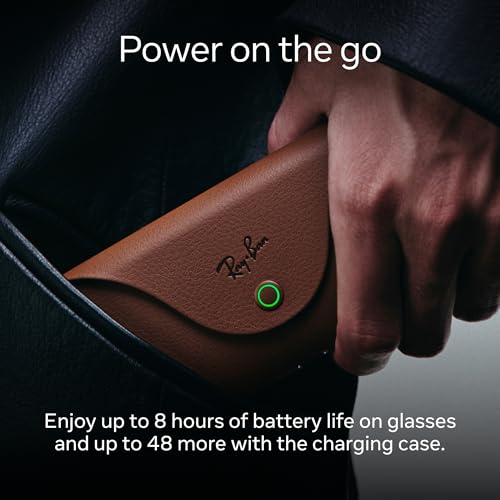
With an onboard operational endurance reaching up to 8 hours under moderate daily use, the glasses are sustained by a hard-shell charging case that delivers an additional 48 hours of mobile reserve power. This specific frame profile suits wearers who require standard lens proportions and a broader bridge fit for daily indoor screen use and transparent optical correction. It yields to the large-format chassis whenever users have wider interpupillary distances or need broader facial coverage.
Meta Adventurer for Urban Exploration




Meta Adventurer 4 photos from the Amazon listing
Best for: Urban commuters seeking conversational AI voice assistance
Pros
- Hands-free Meta AI queries
- Ergonomic custom fit design
- Real-time navigation suggestions
Cons
- Camera resolution not listed
- Battery runtime hours not specified
Built for users navigating transit hubs and dynamic metro environments, the Meta Adventurer concentrates hardware utility around instant audio prompts and conversational artificial intelligence. The device pairs onboard acoustic drivers and microphones with the Meta AI assistant to deliver localized navigation, dining recommendations, recipe ingredient substitutions, and contextual suggestions while traveling. The frame architecture is produced with an imported designation and styled specifically to achieve an ergonomic, tailored fit for both men and women across varied face shapes.
When conducting a technical specification review, the published documentation for the meta adventurer smart glasses maintains several data omissions. The listing does not specify camera sensor resolution, maximum video frame rates, millimeter lens dimensions, bridge width, or onboard milliamp-hour battery capacity. Users considering this model must evaluate it primarily on its advertised conversational intelligence capabilities and ergonomic lifestyle positioning rather than calibrated optical or capture metrics.
This chassis is best matched with casual urban explorers who prioritize conversational queries, hands-free tips, and lightweight everyday styling over verified technical camera specifications or rigorous sports-tracking integration. Wearers seeking documented optical millimeter measurements or dedicated high-definition video recording parameters should look toward the fully documented second-generation Wayfarer or Oakley iterations.
Meta Ray-Ban for Wide-Bridge Comfort
Meta Ray-Ban (Gen 2) Wayfarer Large Smart AI Glasses, 4 photos from the Amazon listing
The large-format iteration of the Meta Ray-Ban Wayfarer brings the updated second-generation component architecture to users requiring increased frame surface area. It carries identical core processing and capture capabilities to the standard frame, headlined by the 12 MP ultra-wide camera system capable of recording up to 3K resolution video clips in continuous sessions up to three minutes. Hands-free voice interactions leverage Meta AI for environmental identification, real-time multilingual translation across European dialects, and voice-prompted reminders, keeping communication accessible without physical device handling.
The primary engineering differentiation rests in the frame dimensions and mechanical weight distribution. The matte black resin full-frame housing holds wider 5.4-centimeter (54 mm) polycarbonate clear lenses, paired with a narrower 18-millimeter nasal bridge and a slightly reduced 15-centimeter temple arm length. In comparing new meta glasses form factors, adjusting the bridge from 22 mm down to 18 mm while extending lens width by 4 mm redistributes optical center alignment, preventing peripheral frame shadowing on broader face structures.
Battery architecture mirrors the standard Gen 2 envelope, providing up to 8 hours of typical execution on a single cycle, with the included charging vault delivering up to 48 hours of autonomous off-grid recharging. Open-ear audio hardware utilizes directional sound channels to deliver media playback while keeping ambient situational noise audible, supported by call-filtering algorithms that cut 90% of wind and street rumble. This variation suits individuals whose temple width causes standard frames to pinch, offering wider coverage without sacrificing optical clarity.
Meta Oakley Vanguard AI for High-Endurance Training



Meta Oakley Vanguard AI 4 photos from the Amazon listing
Best for: Endurance athletes demanding maximum single-charge runtime
Pros
- Up to 9 hours battery life
- Athletic intelligence performance tracking
- Hands-free sports video recording
Cons
- Camera megapixels not listed
- Charging case capacity not specified
Engineered for high-output athletic environments, the Meta Oakley Vanguard AI departs from classic optical aesthetics to deliver dedicated sports telemetry and extended operational longevity. Marketed around athletic intelligence, this wearable device integrates audio reproduction, photo capture, and hands-free video recording capabilities within a rugged sports frame built to withstand aggressive head movements during dynamic drills, cycling sessions, and running workouts.
In terms of continuous operational life, this platform stands out by listing up to 9 hours of battery runtime on a single charge cycle, outlasting the 8-hour benchmark established by the Ray-Ban configurations. The physical chassis requires simple maintenance, with instructions specifying cleaning using a soft dry cloth and storage within an included protective carrying case. The listing notes an imported origin, though specific frame width, bridge millimeters, and lens material designations are not listed in the technical documentation.
The Vanguard AI appeals directly to endurance athletes and outdoor fitness enthusiasts who demand extended operating time for lengthy road sessions and need workout-focused audio accompaniment without wearing in-ear monitors. Because its listing omits exact optical millimeters and camera sensor resolutions, technical purists looking for verified 12 MP capture metrics will find a more transparent optical portfolio in the Oakley HSTN.
Meta Oakley HSTN Smart AI Glasses for Multisport Adaptability




Meta Oakley HSTN Smart AI Glasses 4 photos from the Amazon listing
Best for: Outdoor athletes needing photochromic light adaptation
Pros
- Transitions Grey photochromic lenses
- Garmin and Strava activity telemetry
- 12 MP camera with 100° FOV
- Up to 8 hours battery life
Cons
- Specific frame millimeters not listed
- Three-minute session video cap
Bridging lifestyle aesthetics with dedicated endurance engineering, the Meta Oakley HSTN Smart AI Glasses introduce an advanced optical package centered around adaptability. The round full-frame chassis is fabricated from Oakley proprietary O Matter resin material, delivering impact-resistant structural rigidity while keeping overall weight minimal. The visual hardware is anchored by photochromic Transitions Grey polycarbonate lenses that darken automatically when exposed to direct sunlight and fade to clear indoors, eliminating the requirement to swap eyewear between indoor training spaces and bright outdoor tracks.
The imaging package includes an integrated 12 MP camera boasting a 100-degree field of view (FOV) that records sharp point-of-view photos and 3K Ultra HD video sessions up to three minutes long. Unique software telemetry allows athletes to overlay biometric and performance metrics directly from linked Garmin smartwatches or Strava exercise logs onto captured video clips and images. Open-ear acoustic transducers provide playlist and podcast playback, while Meta AI delivers location-specific contextual queries such as live golf course wind directions and marine surf condition reports.
A full charge powers the HSTN for up to 8 hours of typical operational use, backed by a companion charging case engineered to store an extra 48 hours of mobile power. Voice commands activate through standard wake prompts, supported by manual privacy toggles that disable microphone monitoring at will. This model is exceptionally well-suited for multisport athletes, runners, and golfers who transition through changing lighting conditions and demand verifiable sensor data embedded into their POV media capture.
Ray-Ban Meta for Social Livestreaming and Mixed Lighting


Ray-Ban Meta (Gen 1), Wayfarer, Large Matte Black | 4 photos from the Amazon listing
Best for: Content creators livestreaming POV video to social platforms
Pros
- Direct Facebook and Instagram livestreaming
- Five-microphone spatial audio array
- Interactive POV call sharing
- Transitions photochromic clear lenses
Cons
- Battery runtime not listed in hours
- No onboard GPS geotagging
The large-format first-generation Ray-Ban Meta Wayfarer remains an influential model within the wearable line, configured with specialized media broadcasting capabilities. Built on an Android Wear 1.0 operating foundation, this device houses an ultra-wide 12 MP camera paired with a five-microphone directional audio array, engineered specifically to stream live point-of-view video footage straight to Facebook and Instagram without intermediate manual export steps.
Physical interaction relies on on-device capacitive touch controls combined with tactile mechanical buttons and responsive voice command processing. The chassis features a square profile with full-frame construction, Transitions Clear photochromic lenses, and verified water resistance against light splashes and sweat. Hardware connectivity includes Bluetooth audio routing for taking calls and text composition, accompanied by an interactive POV camera-sharing feature that lets users switch between their phone camera and their glasses camera mid-call. Onboard live translation processes spoken dialogue between six primary languages without network latency.
The listing does not specify standalone battery runtime in hours, millimeter frame widths, or charging case capacities, noting an absence of onboard GPS geotagging. This model serves digital content creators and social media broadcasters who require immediate live-to-platform streaming functionality and light-reactive photochromic optics in a roomy, iconic silhouette, yielding to second-generation hardware when standardized battery metrics and confirmed 3K capture modes are necessary.
How to Choose the Right Meta Smart Glasses
Selecting the correct model from the Meta eyewear ecosystem requires matching structural facial dimensions against intended operational environments. The standard Wayfarer frame provides a 50 mm lens width matched with a 22 mm nasal bridge, offering a balanced stance for users with average or narrow pupillary spacing. Conversely, the large Wayfarer configuration expands lens width to 54 mm while drawing the bridge in to 18 mm, shifting the optical centers outward to eliminate temporal pinching for wider head profiles. The Oakley HSTN utilizes a round O Matter geometry designed to provide neutral universal clearance across cheekbones during high-movement activities.
Imaging specifications must also dictate selection based on downstream media usage. Both second-generation Wayfarer models and the Oakley HSTN supply a verified 12 MP camera sensor supporting 3K Ultra HD recording formats with a hard recording limit of three minutes per continuous session. The Oakley HSTN explicitly documents an expansive 100-degree field of view, ideal for capturing wider peripheral perspectives during athletic motion. Users prioritizing live broadcasting directly to online followers will find dedicated hardware pathways in the first-generation Ray-Ban Meta, whereas the Adventurer and Vanguard listings do not specify their internal camera megapixel ratings.
Battery capacity and power longevity introduce critical operational boundaries. The standard and large Gen 2 Wayfarers alongside the Oakley HSTN establish an endurance standard of up to 8 hours of moderate operational use, supplemented by portable charging cases providing up to 48 hours of secondary recharging. The Oakley Vanguard AI expands standalone single-charge stamina to a class-leading 9 hours, making it the superior technical pick for marathon training or all-day sporting events where access to a charging case is delayed.
Finally, optical adaptability and software utility should guide your investment. Wearers requiring consistent visual clarity in shifting ambient light benefit substantially from photochromic Transitions lenses found on the Oakley HSTN and select first-generation Wayfarers, which dynamically tint when exposed to UV radiation. Athletes who rely on biometric verification can leverage the Oakley HSTN to overlay data from Garmin and Strava ecosystems onto their recordings, while urban commuters may find the offline multilingual translation and contextual speech parsing of the standard Wayfarer lineup sufficient for everyday utility.
FAQ
How long does the battery last on Meta smart glasses?
Onboard operational runtime depends on the exact model and usage intensity. The second-generation Meta Ray-Ban Wayfarer frames and the Oakley HSTN deliver up to 8 hours of typical use on a full charge, backed by portable charging cases that supply up to 48 hours of mobile power reserve. The Oakley Vanguard AI extends standalone runtime to up to 9 hours for athletic workouts. The listings for the Meta Adventurer and first-generation Ray-Ban Meta do not specify exact battery endurance figures.
What camera specifications do Meta smart glasses offer for video?
The documented second-generation Meta Ray-Ban glasses feature an ultra-wide 12 MP camera capable of recording point-of-view videos in up to 3K resolution. The Oakley HSTN pairs its 12 MP sensor with a calibrated 100-degree field of view to capture wide-angle action clips. Continuous video recording across these documented models is capped at three minutes per session to manage storage and thermal dissipation. Camera megapixel metrics are not specified in the product data for the Meta Adventurer.
What is the difference between standard and large Wayfarer frames?
The primary differences lie in optical bridge width, lens diameter, and temple arm dimensions. The standard Gen 2 Wayfarer features a 50-millimeter lens width, an expansive 22-millimeter nasal bridge, and a 15.6-centimeter temple arm length. The large Wayfarer variant expands the lens width to 5.4 centimeters (54 mm) while narrowing the bridge width to 18 millimeters and shortening the temple arms to 15 centimeters, providing a specialized ergonomic geometry for wearers with wider facial profiles.
Can Meta smart glasses translate foreign languages without Wi-Fi?
Yes, the integrated live translation software on second-generation Meta Ray-Ban glasses can translate spoken conversations between English, French, Italian, Spanish, German, and Portuguese in real time without requiring an active Wi-Fi connection. The translation feature utilizes local processing assisted by a standard Bluetooth pairing to a mobile smartphone running the Meta application.
Do Meta smart glasses integrate with fitness tracking platforms?
The Meta Oakley HSTN smart glasses feature direct software compatibility with third-party activity tracking platforms. Users can link compatible Garmin fitness devices or Strava accounts to overlay verified athletic telemetry, such as pace, speed, and distance metrics, directly onto point-of-view video recordings and photos before sharing them.